1919: From Mansion to Mission: Humanities Center History
Loyola’s Humanities Center began as the Red Cross Institute for the Blind, where WWI soldiers relearned independence through training, family‑supported therapy, and community life.
Madison Boris, ’14, MBA ’26
Before becoming the Francis Xavier Knott, S.J., Humanities Center, the stately Tudor house at the center of campus served a different mission.
In the aftermath of World War I, the mansion was transformed from an unoccupied private residence into the Red Cross Institute for the Blind. There, soldiers who had lost their sight in combat received training intended to prepare them for civilian life. A 1921 Baltimore Sun article noted that nearly half of all U.S. soldiers blinded during the war received treatment at the building, then known as Evergreen, Jr.
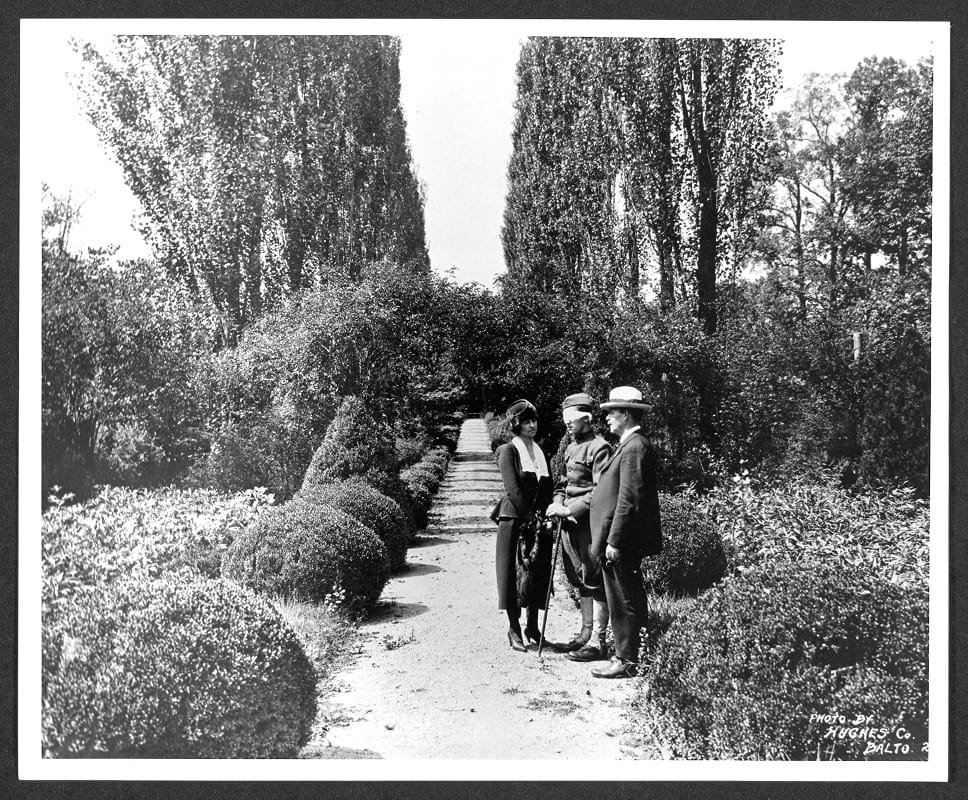 The Tudor mansion was transformed from an unoccupied private residence into the Red Cross Institute for the Blind. - Photo courtesy of Loyola/Notre Dame Library
Inside the country's first veterans' blind rehabilitation center, veterans learned practical skills such as writing and reading Braille. Other facilities on the property included spaces for recreational activities like swimming and dancing. Instruction emphasized personal care and independence and was designed to support soldiers through a monumental physical and mental transformation.
“One of the most innovative aspects of the Evergreen rehabilitation program was the encouragement of wives and family members to participate in the therapy their loved ones received,” wrote Gregory L. Goodrich, Ph.D., and Tom Zampieri, Ph.D., in the Journal of Visual Impairment & Blindness. The property’s size and layout made it well suited for these purposes: former bedrooms were reconfigured for family living, while shared rooms were used for classes and social gatherings.
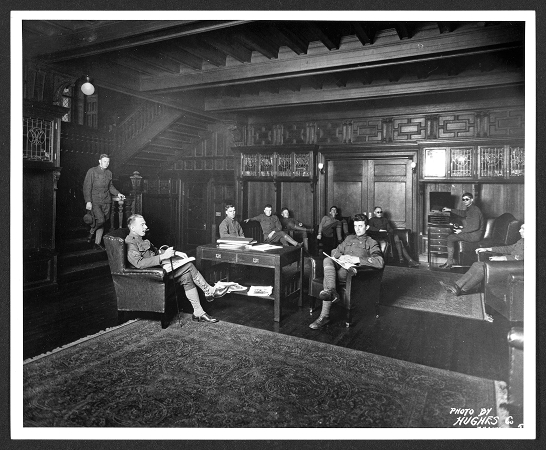
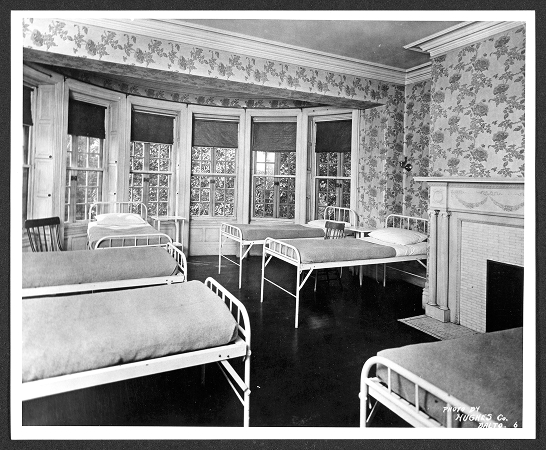 Before becoming the Francis Xavier Knott, S.J., Humanities Center, the building accommodated nearly half of all U.S. soldiers blinded during World War I. Today, the Humanities Center houses academic departments, administrative offices, and community gathering spaces. - Photos courtesy of Loyola/Notre Dame Library
By 1925, the Red Cross Institute had concluded its work at Evergreen, Jr. Loyola, which had purchased the mansion from the Garrett family, was ready to use the site for its growing campus.
Though the Humanities Center’s role as a rehabilitation center was brief, it served a significant role in the national recovery effort.