Gabrielle Miller, Janet Preis, Ed.D.
Effects of Frequency of Oral Hygiene on the Incidence of Aspiration in Individuals with Dysphagia
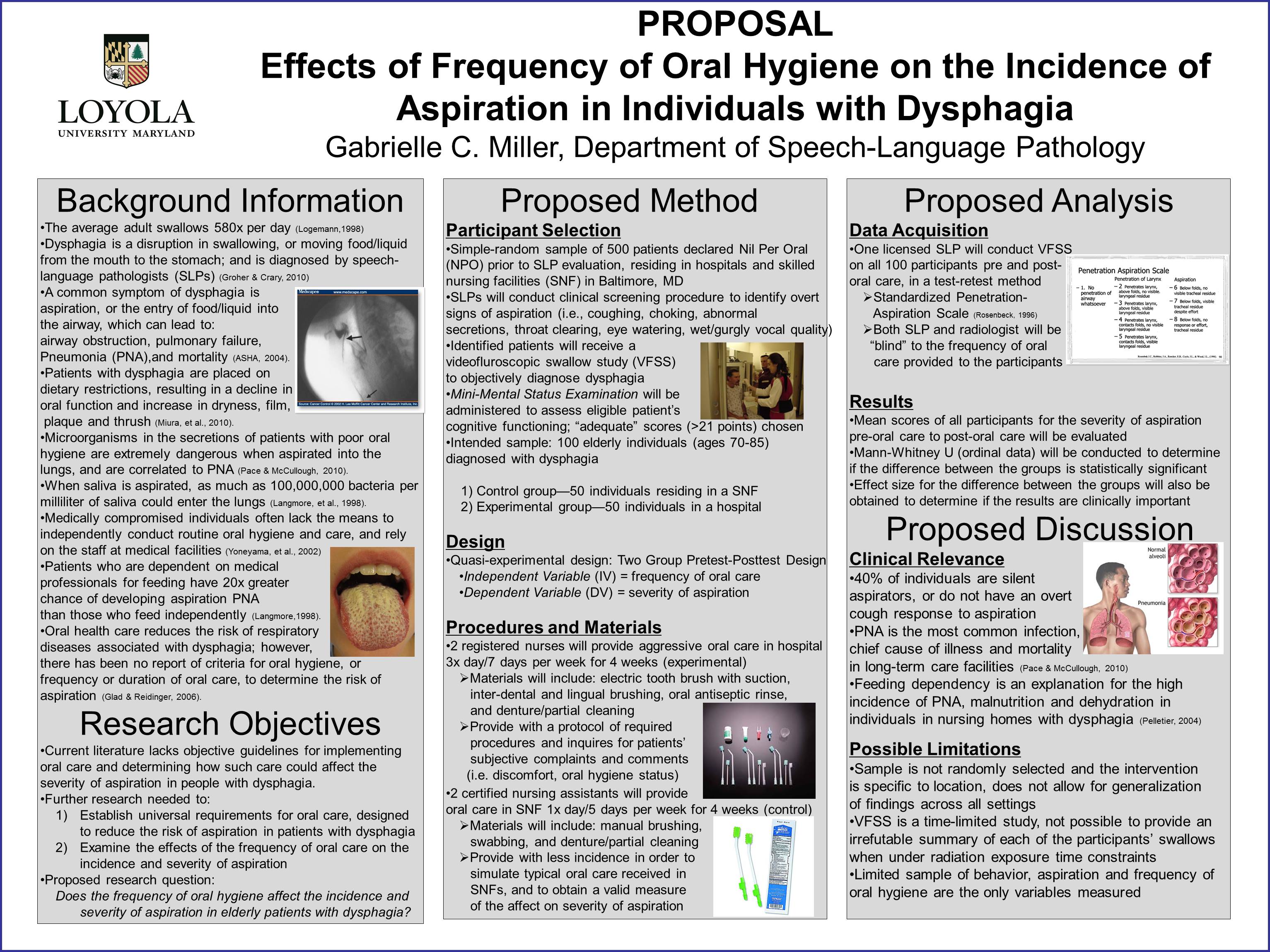
Providing services to manage aspiration in individuals with dysphagia requires knowledge of the anatomical structures involved in speech and swallowing, which is a main concern for speech-language pathologists. In most cases, speech-language pathologists are the primary health care professionals in a facility who provide primary dysphagia services (ASHA, 2004). Therefore, knowledge of current evidence-based practice regarding clinical management techniques is essential to identify aspiration, as well as to insure the health, safety, and nutrition of patients with dysphagia. However, a multidisciplinary approach involving nurses, CNAs and speech-language pathologists, is necessary to address the issue of oral hygiene and general health in patients with dysphagia (Pace & McCullough, 2010).
As previously noted, research reveals that proper and routine oral care reduces the risk of aspiration pneumonia in elderly individuals with dysphagia (e.g., Pace & McCullough, 2010; Yoneyama, et al, 2002). However, a limitation in aspiration pneumonia research is that the procedures used to qualify swallowing problems are not always accurate, and sometimes only include subjective statements about coughing during feeding (Terpenning, 2005). Furthermore, there is lack of evidence and literature to support the guidelines for implementing oral care strategies, selecting the method of delivery, and the relationship between poor oral hygiene and the occurrence of aspiration in general. Consequently, there is a need for further research to examine the affects that frequency and duration of oral care have on individuals who aspirate, as well as to define the requirement of oral care necessary to reduce the risk of aspiration. Therefore, a reasonable proposal for a research question is: does the frequency of oral hygiene affect the incidence of aspiration in elderly patients with dysphagia?
Quick Details
April 17, 2026
6 - 8 p.m.
Andrew White Student Center, 3rd Floor Space