Artist Bria Edwards presents solo exhibition, What We Do, We've Always Done
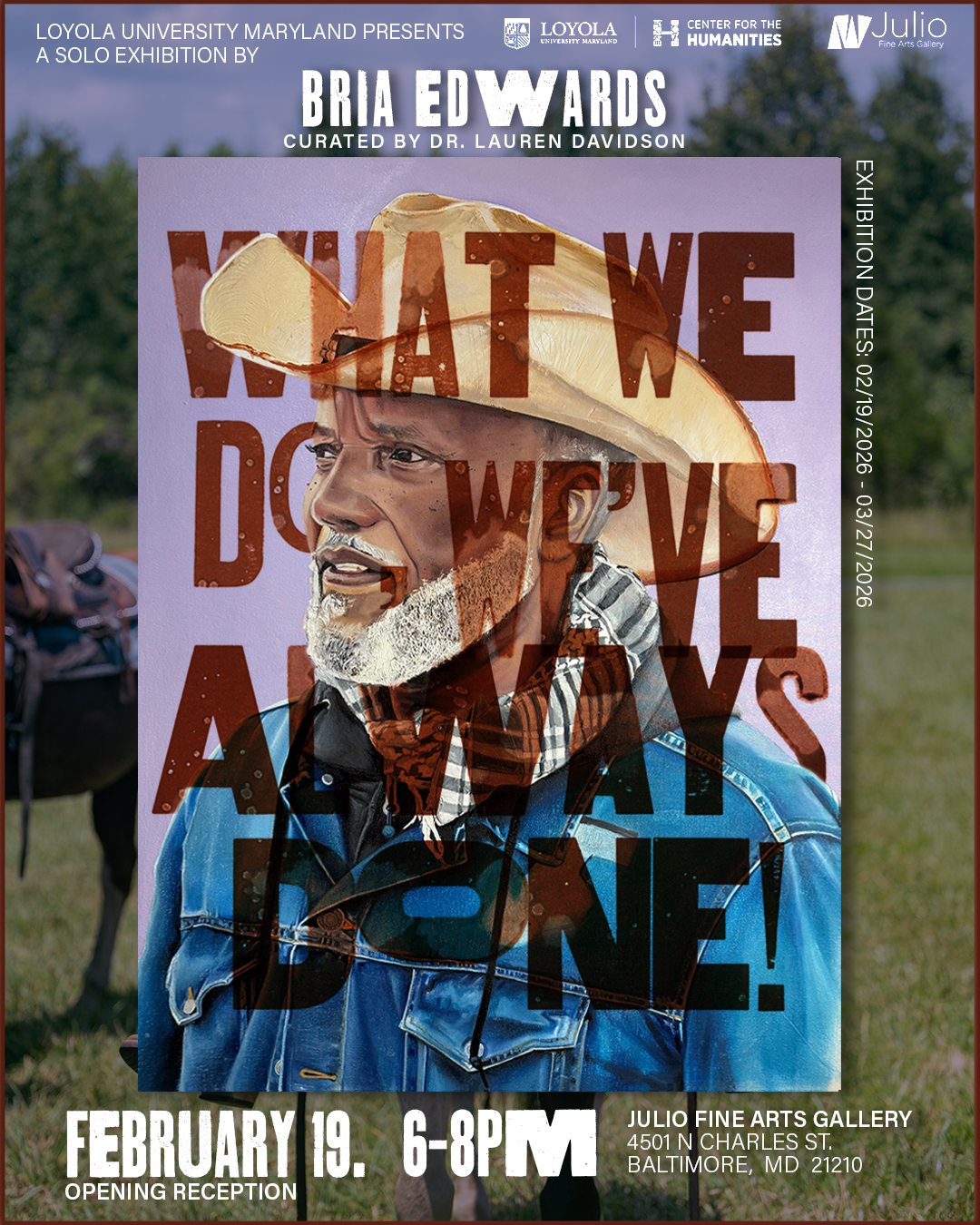
The Julio Fine Arts Gallery at Loyola University Maryland presents What We Do, We've Always Done, a powerful solo exhibition by artist Bria Edwards that chronicles the rich, often-overlooked history of Black horse rider culture in Maryland.
The exhibition, which opened Feb. 19, 2026, and runs through March 27, 2026, features vivid oil paintings, striking photography, and dynamic video—the culmination of two years of deep research and candid interviews with Black equestrians who continue to shape and preserve this historic tradition.
Curated by Lauren Davidson, DVM, of Museum Nectar Art Consultancy, What We Do, We've Always Done continues Edwards' intimate examination of Black leisure, following her critically acclaimed 2023 exhibition More Time in a Day at Eaton DC. Through her multidisciplinary practice, Edwards illuminates the nuances of Black equestrian culture—celebrating its vibrancy, resilience, and enduring connection to Maryland's rural landscapes.
"From the early days of enslavement when African Americans were forced into roles as skilled horsemen on plantations to the present day, where Black equestrians continue to claim space in a cultural landscape not always seen as their own, Edwards' work highlights the strength and perseverance of these often-forgotten communities," Davidson said. "Her work is not merely a depiction—it is a reclamation of space, history, indelible joy, and heritage, reminding us that the story of this country is incomplete without the story of the Black rider."
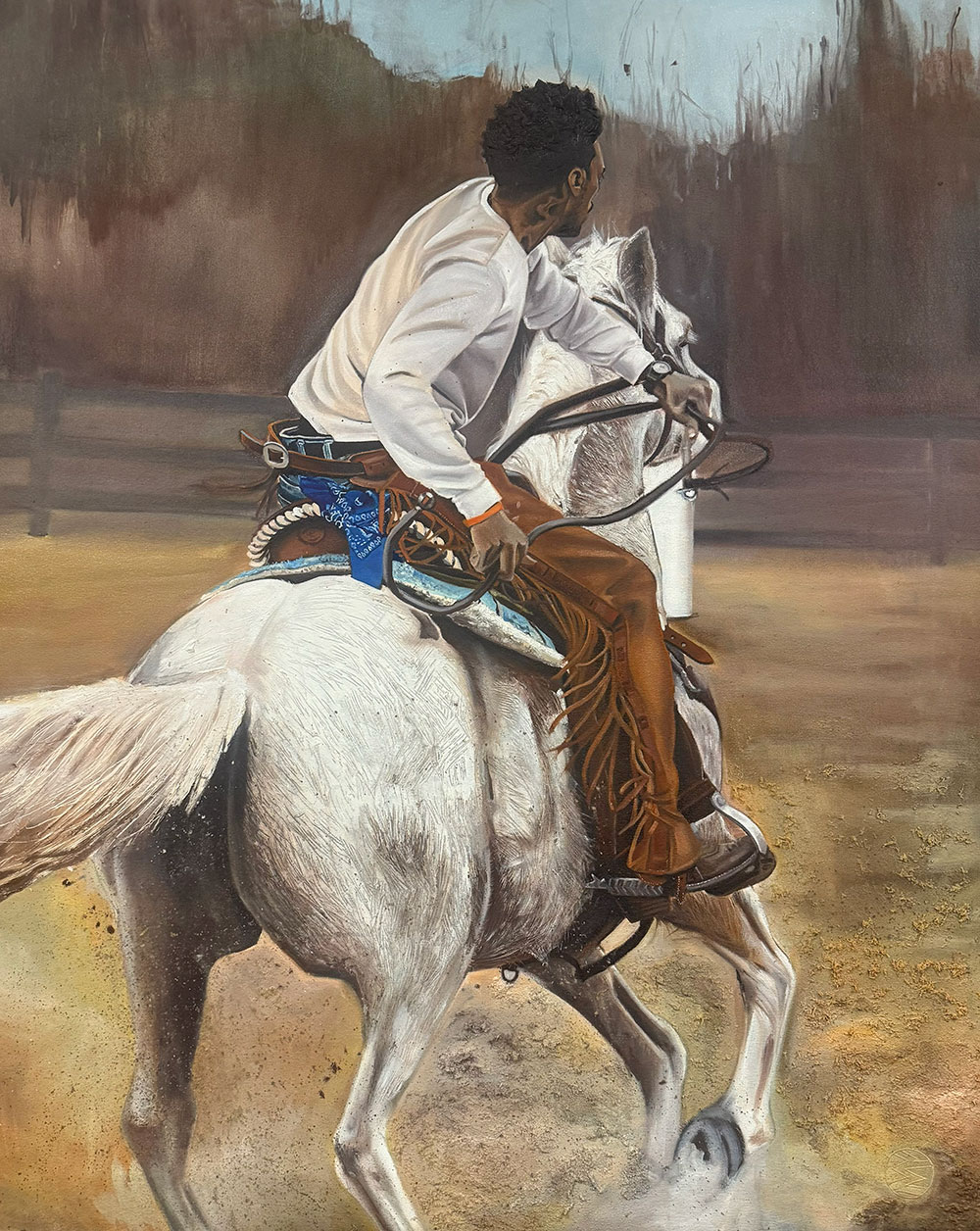 Edwards' large-scale canvases offer meditative reflections of the riders she encountered
over two years of fieldwork, captured with an eye for both power and grace. Some portraits
are raw and unfiltered; others, serene and reflective. Together, they invite viewers
to consider the intimate, symbiotic relationship between rider and horse. Her documentary
photography, taken at equestrian centers and open fields across Maryland, emphasizes
the freedom, confidence, and quiet defiance of Black riders—individuals who refuse
to be relegated to the margins of history.
Edwards' large-scale canvases offer meditative reflections of the riders she encountered
over two years of fieldwork, captured with an eye for both power and grace. Some portraits
are raw and unfiltered; others, serene and reflective. Together, they invite viewers
to consider the intimate, symbiotic relationship between rider and horse. Her documentary
photography, taken at equestrian centers and open fields across Maryland, emphasizes
the freedom, confidence, and quiet defiance of Black riders—individuals who refuse
to be relegated to the margins of history.
In a unique partnership, Edwards has collaborated with Loyola University Maryland's radio storytelling and documentary production class to document her entire creative process—from interviews with Black equestrians to the translation of documentary photography into finished paintings. This institutional collaboration positions the exhibition as both artistic achievement and academic case study in how contemporary artists chronicle living history.
The exhibition weaves connections between history, community, and identity, revealing how ancestral ties to the land extend far beyond forced labor. Edwards' work shifts the narrative of Black identity toward one of joy, familial resilience, and pride—challenging misconceptions and urging viewers to reconsider the legacies of equestrianism, cowboy culture, and America itself.
"Ultimately, What We Do, We've Always Done reveals the enduring stories of Maryland's Black horse riders while contributing to a broader dialogue about generational traditions that exist beyond racial oppression and center the freedom to choose joy," Davidson said. "This exhibition invites all who encounter it to honor the perseverance and brilliance of Black equestrians, to reflect on how the past shapes the present, and to recognize the profound, enduring presence of Black identity in all facets of American life."
Edwards is a multidisciplinary artist whose practice encompasses painting, photography, and visual storytelling. Her methodical approach, spending two years building trust with her subjects before translating their stories onto canvas, demonstrates a commitment to rigorous research and authentic community representation. Her work has been featured in major publications and continues to explore themes of Black leisure, agency, and cultural reclamation.
Established in 1985, the Julio Fine Arts Gallery is committed to providing exhibitions that are both innovative and intellectually challenging to Loyola University Maryland and the public at large. The Gallery also houses a permanent collection that includes prints and paintings by artists such as Rouault, Klee, and Red Grooms, as well as several African sculptures.
All gallery events are free and open to the public and draw participation from not only the University community but from local art lovers, too. The Gallery is supported in part by the Maryland State Arts Council.