Alumni Profiles
Service over Self: Charles Musante, '94
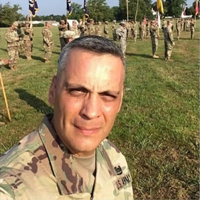 Growing up near West Point, New York, Charles Musante, ’94, visited the United States
Military Academy several times on childhood field trips and felt an obligation to
join the military from an early age.
“I always wanted to serve in the Army,” Musante said. “The day and age that we live in, some people don’t find that calling, but it was something that I felt I was being called to do—to serve in the military.”
That calling directed Musante to Loyola, and he knew instantly that he was right where he was supposed to be.
Musante recalls his first training exercise during his first year, “I lived in Butler Hall and could see the ROTC building from my dorm room. Sometime in early October, I had to go over, in uniform, to Ft. Mead for the weekend to take part in military exercises. I was fulfilling my dream of becoming an Army officer and leading.”
It didn’t take long for Musante to find someone to nurture that dream.
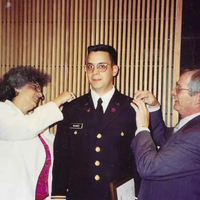 “What I like to tell people is that I had three or four mentor pillars during my time
at Loyola, and one of them was the professor of military science, Lt. Col. Charlie
Reardon,” Musante said. “He was probably one of the best military leaders I’ve encountered
since I’ve been in the military, because I think he understood the Ignatian principle
of being people for and with others as well as the nature of what it means to serve:
to lead is to serve, and to serve is to lead. You don’t learn that in a lot of places,
but at Loyola, when you’re a senior in the ROTC, you get to take on a leadership role—Company
Commander of the Loyola Cadets—while also having the opportunity to be able to do
other things on campus.”
Musante took full advantage of that opportunity. He served as a student coordinator for two years at what is now the Center for Community, Service, and Justice (CCSJ); sang in the Chapel Choir all four years at Loyola; volunteered in Tijuana, Mexico, with Project Mexico; and spent his senior year as a student intern with Campus Ministry.
Musante graduated and was commissioned in 1994, then completed his law degree in 1997 at Seton Hall Law School. He entered active duty that fall and used all the lessons he learned about leadership at Loyola as his guiding force throughout his 20-year military career.
When asked what a career of service to the country means to him, Musante responded, “That’s a hard question. It’s like the Ignatian principle of being a person for others. You are serving something. It’s not about me; it’s about the people I’m serving. It may be someone you never even know, but you are willing to stand in a dangerous place and go wherever you are called in order to uphold your oath to support and defend the Constitution of the United States against all enemies, foreign and domestic. You’re defending the ideals of this country.”
Musante credits his time at Loyola for teaching him the value of serving others as a leader.
“Ignatian leadership is servant leadership,” Musante said. “At my last active-duty job, my chief of staff, fellow Greyhound Col. (Ret.) Jerry Vavrina, ’87, would say that other people just don’t understand that sense of service. It’s just taking the time—in any leadership position—to say, ‘What do you need? How can I help you?’”
A Legacy of Service, Friendship, and Purpose: Salvatore Candela, '03
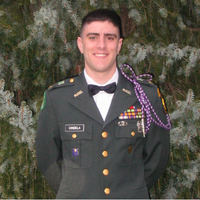 Lt. Col. (Ret.) Salvatore Candela, '03, reflects on the Loyola experiences that shaped
his 21-year Army career and a lifetime of connection.
The year was 1999 and Sal Candela was on his way to class in cargo shorts and flip-flops. His mind was less focused on getting to class than on what was happening afterwards: meeting up with friends down at the Inner Harbor or heading to a buddy’s place at the Garden Apartments to hang out and play video games.
Candela remembers thinking “I’m just living my best life,” before his eyes were drawn to a plaque in Jenkins Hall. The plaque lists the names of Loyola students who served in World War II, some of whom never came home. That moment first sparked his interest in the military, which led to a 21-year career in the United States Army. He retired in 2024 as a Lt. Colonel.
A second spark came during his junior year at Loyola, on the morning of Sept. 11, 2001. Candela grew up in northern New Jersey, and both of his parents worked in Manhattan and were trapped in the city after the terrorist attacks. Candela didn’t hear from them until the next morning. The horrific events of that day, amplified by his own fear for his parents, brought things into perspective for Candela.
 “Our way of life is awesome and not permanent," Candela said. "People have to step
up and defend it.”
Candela reflected on “growing up in an Italian family in New Jersey,” explaining that he had a huge family and attended a great high school before studying at Loyola. “It was a wonderful life,” Candela said, “and I want my kids to have the same opportunities, the same chance at life that I had.”
Candela’s thoughts return to the World War II plaque that caught his eye in Jenkins Hall, while he was excited about hanging out and playing video games with friends after class.
“All those people who served were just people hanging out with their buddies,” Candela said. “They were all Loyola students at one point. I always found that plaque very humbling.”
The Legacy of Loyola Connections
“First and foremost, I’m still very good friends with a lot of my classmates from Loyola,” Candela said. “Those guys who were in the ROTC with me, or roommates I had at Loyola—that network of friends that I developed at Loyola, I keep to this very day.”
In fact, Candela still plays Dungeons & Dragons (D&D) with a group of those Loyola friends more than 20 years later.
“We meet almost once a year in the Maryland / D.C. area, where most of my friends from Loyola still live,” said Candela, who lives in North Carolina.
Candela is grateful for the “blessings of technology” that allow him to play D&D or video games online with his Loyola friend group
“I don’t think a day goes by where we’re not on our infinitely long text thread or where somebody’s not texting or sharing memes,” Candela said.
The most valuable Loyola lesson
History was Candela’s passion, but he had a terrible habit of rushing through his schoolwork. It was Kelly DeVries, Ph.D., professor emeritus of history, who instilled in him the importance of slowing down “to create the best product possible.”
Candela added, “He taught me, in a very fatherly way, to slow down and do things right.”
DeVries’ lessons served him well throughout school and his military career.
“In the Army, you need to slow down, and you need to do things right, because if you rush through things, if you wing it, at best you’ll do a crappy job,” Candela said. “At worst, if you call in a fire mission improperly or write a report that has the incorrect recommendations on it, somebody’s going to get hurt.”
Candela has carried traces of this institution that helped shape him throughout his life—from the friendships he formed, the mentor who transformed his approach to learning, and the moments that inspired more than two decades of service to his country.
Dreams Dashed and Dreams Fulfilled: Richard Oppitz, Jr., '68
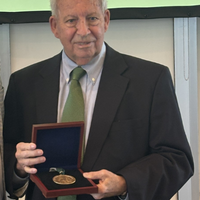 Richard “Dick” Oppitz, Jr., ’68, served in the United States Army from 1968-70, and
left as a 1st Lieutenant. Early on, Oppitz didn’t want to stay in the ROTC, but he
is living proof that what you think may be a missed opportunity can be the most enriching
decision of your life.
“I really didn’t want to go to Loyola College,” Oppitz remembers. “I had been wooed pretty hard by Old Dominion.”
The Virginia university had offered him a scholarship to play baseball, but when his father, Richard Oppitz, Sr., ’43, learned that his son would be living in a coed dorm, that idea went out the window.
Oppitz came from a military family. Both his parents served in the Navy during World War II—his father as an ensign on a combat ship in the Atlantic and Mediterranean, and his mother as a nurse. His paternal grandfather served in World War I and even received bronze and silver medals for his service.
Though the younger Oppitz felt called to serve in the military, in 1965, he faced a dilemma: stay in the Loyola ROTC and join the military or leave the program and pursue his aspiration to play professional baseball after college. Though major league teams, including the New York Yankees, approached him to sign, after discussing it with his parents, Oppitz ultimately opted to stay in ROTC and pursue a military career.
“It cost me on the baseball side,” Oppitz said, “but it actually worked out extremely well for me.”
After Loyola, Oppitz completed officer’s basic school in Texas and, because he’d studied German in high school and at Loyola, he was sent to Germany.
He spent two years stationed at the Fulda Gap on the border of East Germany and West Germany, often in hip-deep snow with Russian anti-aircraft right across the border.
Oppitz also traveled throughout England, Ireland, and Scotland, giving briefings on weapons systems at US bases there. Eventually, he worked in military banking. One day, on a visit to a German bank, he met a young “Army brat” named Bobbie Jo, who would later become his wife. They celebrated 56 years of marriage this past June.
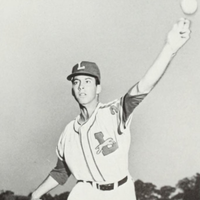 In addition to meeting the love of his life during his military service, Oppitz continued
to nurture his passion for baseball. He played on base teams in Texas and Germany
and remained involved in the sport throughout his military career and well into civilian
life. Despite never making it to the “big leagues,” Oppitz played semi-pro ball, did
some coaching, and even scouted for the Baltimore Orioles part-time.
Oppitz’s time working in military banking translated to a long professional career in banking. He was appointed as the chief credit officer at Provident Bank, which he cites as “the best thing that ever happened to my career.” There, Oppitz rose through the ranks to serve as executive vice president and member of the bank's office of the chairman, before retiring as president of Northwest Savings Bank at the age of 67.
For Oppitz, what stands out about his banking career was how much Loyola meant to corporate Baltimore.
“If you had a Loyola degree, they wanted you because they knew the quality of the education,” Oppitz said.
Oppitz credits his time both in the military and at Loyola for preparing him for corporate life. The public speaking skills he developed, Loyola’s high academic standards, the opportunities to learn and hone his management and interpersonal skills, plus what he learned about fulfilling a mission during his military stint in Germany all led to his very successful professional career. And looking back on his career and his incredible family, he knows beyond a doubt that he made the right decision all those years ago.
Tara Larson, '26
Tara Larson, an Elementary Education Class of 2026 graduate with dual licensure in Special Education!
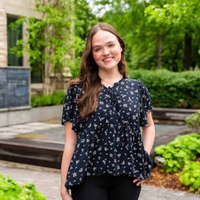 "Loyola has prepared me to be a confident leader," said Larson. "Loyola's clubs, courses,
and organizations encouraged me to voice my perspective and live with purpose, reflecting
the Jesuit values I believe in."
During her time at Loyola, Tara embraced every opportunity. She served as a Loyola Graduate Assistant, participated in the Loyola Education Society, Best Buddies program, and the Loyola Dance Company, studied abroad in Cork, Ireland, and completed field experiences with Baltimore City and Baltimore County Public Schools through Loyola's Education department. During her senior year, she managed her own classroom alongside her mentor, Denise Gillespie, ’92, at Lutherville Laboratory, and elementary school in Baltimore County.
"The guidance, trust, and encouragement I received from Ms. Denise showed the impact a dedicated teacher can have on a student's life. Student teaching helped me connect lessons from Loyola classes to experiential learning while developing my personal teaching style."
Tara also presented research at Loyola's annual Undergraduate Research Colloquium, where her project, "Scaffolding Words, Strengthening Readers," earned third place. "The finding reinforced my passion for integrating evidence-based practices into my teaching philosophy. I share this recognition with the incredible young learners I had the privilege to teach."
This fall, Tara is attending Teachers College at Columbia University to pursue a Master of Arts in Curriculum and Teaching with Professional Certification in Elementary Education. She will also serve as an associate teacher at the Academy of St. Joseph in Manhattan. As she begins this next chapter, she remains committed to Jesuit values, aiming to be "an active example of of caring for the whole person by engaging with communities and incorporating Ignatian Citizenship into my daily life."
Tiana Wynn, MBA '14
More than a decade after the Evergreen Campus, a partner in one of the largest minority-owned accounting firms in the country embodies Loyola's core value of a constate challenge to improve
 For some, studying abroad in Chile might be one of the highlights of their collegiate
career, but for Tiana Wynn, MBA '14, it paled compared to her sense of service and
community.
Though Loyola University Maryland is not her alma mater, Wynn points out that her graduate studies at Loyola hit differently compared to her days as an undergrad, including ongoing relationships.
"One of the things that was different was the relationships that I built with members of my class, as well as my professors," said Wynn. "I also think it was just the diversity of being an undergrad."
Wynn wasn't only referring to race or socioeconomic status, but the expansive range of experience among her classmates that added a deeper understanding to her time at Loyola.
"(Undergrads are) all 20 (years old), they'd only been living away from parents or families for three years, no one had had a full-time job before," Wynn noted. "Whereas for grad school, we really did have a mix of individuals in our class from different walks of life. We were all at different places in our career and I felt like that really added to what your were able to learn in class because people had different insights from what they'd seen," continuing, "That was just something that always stuck with me."
It's a perspective that Wynn has carried throughout her professional career, which currently finds her in a partnership role with SB & Company, LLC, one of the largest minority-owned accounting firms in the nation.
"I lead our employee benefit plan practice, so I serve as our designated audit quality partner," said Wynn. "I audit from $2 million up to $80 billion of pension and retirement assets for various state and local governments, large corporations, and not-for-profits."
For Wynn, one of the appeals of the work is knowing it contributes to the interests of the public.
"We are always looking at 'who are the users of the financial statements?' and giving an opinion on whether or not we believe the information included in the audited financial statements is giving accurate information to the public or the users of those financial statements."
Wynn doubled down on her concern for community and the public good in 2019 when she began volunteering with The Arc Baltimore, but quickly adds that she didn't choose The Arc, it was the other way around.
A long-time mentor alerted Wynn to an opportunity for The Arc Baltimore and its need to fill seats on its board.
"They were looking for women, and they were looking for people in accounting because that was something that was down on the board at the time," said Wynn. "The Arc Baltimore assists persons with developmental disabilities, but one of the offshoots of that is that they also have a foster care program. I'm a product of the Baltimore City foster care program, so that was something that drew me in to be open to the opportunity."
Since joining, Wynn has hosted The Arc Baltimore's first post-pandemic, in-person retreat at SB & Company, has made its conference space available for The Arc's Career Catalyst program supporting workforce development for their participants, and has risen to board chair.
Despite such crucial contributions, what happened next was not on Wynn's radar.
During The Arc Baltimore's Catalyst for Change Awards Ceremony in June, Wynn received the annual Volunteer Service Award, which is presented to an individual or group demonstrating commitment to The Arc Baltimore's mission by providing voluntary support to the organization and those people with developmental disabilities whom it supports.
"I didn't even know the award existed before," chuckled Wynn, "I didn't know it was something that was given out until I got the letter in the mail and emailed our development person and I go, "What is this?"
After revealing the reasons for which they had nominated her, Wynn felt honored, but also couldn't believe where her volunteer work had taken her.
"I never thought that I would have ended up being the board chair," declared Wynn. "If you had asked me six or seven years ago, I just wanted to be on the gala committee—I thought it was fun, galas always need accounting—I didn't expect to become as involved in events in Annapolis and writing letters to communicate with senators."
An unexpected journey that has led to a perspective that didn't exist before Wynn's work with The Arc Baltimore began.
"I can now explain to you the importance of having safe play spaces like the materials playgrounds are made out of," said Wynn. "Those are just things that I didn't understand, but now when I go to vote, and read everything on the docket, I ask, 'what is it that they're really asking to put city or local dollars to? What should I expect to see in my community?'"
"It really added this layer of community focus that I didn't know was missing," said Wynn. "It was one of the opportunities that I've had in my professional career where it wasn't just focused on approving the budget or what's the budget-to-actual. It was understanding the the impact of different federal and state laws around disability dollars. What impact does it have, not only in Baltimore, but in Maryland and other states?"
It's been a journey Wynn feels fortunate to experience.
"I'm very blessed to have had that opportunity and something that, even now, when I go to my clients who are in the same space, I have a different lens that I can look through. It's not just my accounting lens, but also that lens of, 'how does the change in in these dollars impact the delivery of the service or that particular not-for-profit?'"
As Wynn was recognized for her investment and commitment to The Arc Baltimore in a room filled with fellow volunteers from The Arc Chesapeake, The Arc Howard County, and beyond, it brought her to a revelation.
"It shows that the work and efforts didn't go unnoticed, but it also made me feel like I have to keep going," said Wynn. "You can't get an award and then disappear," Wynn laughed, continuing, "that you didn't do it just for the award, but you did it because you were truly invested in what that (volunteer work) represented."
Lisa Mazzuca, '91
Search and Rescue Mission Manager played a critical role in NASA's Artemis II mission
 For 10 days in April 2026, NASA's Artemis II mission held the world's fascination.
Not only was it the first manned spaceflight to conduct a lunar flyby in half a century,
but also, its astronauts traveled farther from Earth than anyone in human history—more
than 250,000 miles—testing deep space systems and laying the groundwork for future
Moon landings.
At the heart of the mission's successful conclusion was Loyola alumna Lisa Mazzuca, '91. As NASA's mission manager for search and rescue, Mazzuca played a pivotal role as Artemis II re-entered Earth's atmosphere and splashed down in the Pacific Ocean on April 10. Mazzuca and her team operated 24/7 on console at Goddard Space Flight Center (GSFC) in Maryland, at Mission Control in Houston, Texas, and on the ship awaiting Artemis II's return.
"I was the one on the bridge who provides the capsule location and astronaut locations if they had to egress from the ship, so my first thought was, 'is the capsule on a nominal trajectory?'" Mazzuca said. "The good thing there is that NASA Mission Control tracks the capsule throughout the mission and knew where it was supposed to splashdown, so we knew approximately where to look in the sky."
"So, I'm looking, looking," Mazzuca paused, "and then I see a tiny object off the bow of the ship with some orange above it," Mazzuca said, which prompted "the biggest sigh of relief. It's hard to see such an object on the ocean a couple of miles away. That's why the ship relied on our office to give them range and bearing (distance and compass reading). That data comes from our ground station at GSFC."
Mazzuca and her team had antennas pointed toward the west coast to pick up satellites with search and rescue (SAR) payloads between the east and west coast. The data was beamed down to GSFC and a location was calculated. From there, they transferred the data to Mission Control and the ship using a graphical location tool that Mazzuca's team had built.
"Because this was a nominal splashdown, nerves calmed down quickly," Mazzuca said. "If things didn't go as planned, like the capsule landing out of sight of NASA assets, or something went wrong with the capsule that forced the astronauts to egress, then that's a whole different story."
To provide a sense of the pressure her team was facing, Mazzuca referenced Apollo 13, a film that chronicled NASA's efforts to return three astronauts to Earth following a catastrophic oxygen tank exlosion during their mission.
Despite three-and-a-half decades of experience with GSFC, Mazzuca agreed that she was nervous about this crucial mission.
"No doubt!" Mazzuca exclaimed. "NASA hasn't done this since the Apollo era, and our SAR team working on console and the ship to provide coordinates has never been done, but our team was ready, and we knew what we could control for a given challenge during the mission, so the idea was to stay focused and execute what we trained to do. But to say we weren't nervous during launch and landing would be a lie."
A year before Artemis II launched, Mazzuca and her team wrote nominal and contingency-related operational procedures, ensuring they knew how to interface with NASA Mission Control. After many months of simulations, the team was able to plan for all potential problems with the ground station at GSFC as well as the higher-level mission problems at Mission Control. And most importantly, they were able to present the capsule's real-time coordinates to the Navy ship charged with finding the capsule and recovering the astronauts.
"Technology is a roadmap to increasing lives saved," Mazzuca said in reference to the installation of Advanced Next-Generation Emergency Locator (ANGEL) in the astronauts' life vests.
Employing the new Cospas-Sarsat technology, ANGEL beacons rely on transponders hosted on global navigation satellite systems to detect distress beacons and relay their signals to ground stations. These new personal-use beacons allowed NASA to track the astronauts more accurately than the previous iteration developed more than 40 years ago.
"It's extremely difficult to find a person bobbing in the ocean," Mazzuca said, "so knowing exactly where they would be was critical for rescue. Fortunately, we didn't have to use them!"
Mazzuca's preparation for the Artemis II mission began with her days at Loyola University Maryland.
"My path changed when I had a planetary and small bodies—meteors for exmple—physics class with Brother Guy Consolmagno from the Vatican Observatory, who was a visiting astronomer," Mazzuca said. "That was my senior year, and he was merciless on us! But I thrived and immediately saw how I was going to apply my mathematics major. His guidance was clear, and his faith was interwoven with astronomy, something many people struggle to unify. NASA came onsite for interviews. I managed not flub up, and I was hired. My path was set, and it's been a great career that I will look back on fondly once I retire. TBD on the retirement!"
Mazzuca credits her success not only to her talents and ingenuity, but also because the University prepares students for lives of service and significance.
"I see Loyola as the spark that put me on the path I was meant to be on," Mazzuca said. "From the professors that I had very strong connections to (thank you, Dr. Young!) and who helped give me confidence to excel in my classes to the strong theology and philosophy viewpoints I needed to round out the STEM road I was on. I think the combination was needed to best get me to understand a larger picture of humanity and make me capable of eventually being a leader."
To learn more about Mazzuca and her NASA career, please visit the Loyola magazine website.
William "Billy" Edwards, '85
A Legal Pioneer Advancing Justice for People with FASD and Intellectual Disabilities

William "Billy" Edwards is internationally recognized as a pioneering legal advocate and educator whose work has transformed how the justice system understands fetal alcohol spectrum disorders (FASD) and intellectual disabilities. For nearly three decades, Edwards has led efforts to ensure that courts, attorneys, and policymakers respond to neurodevelopmental disabilities with knowledge, fairness, and compassion.
Edwards first emerged as a leader in this field in 1997, when he delivered one of the earliest legal trainings on FASD to the Louisiana Association of Criminal Defense Lawyers. Since that time, he has organized and led nearly 200 FASD trainings and consulted with attorneys around the United States and in several countries worldwide.
A Deputy Public Defender with the Los Angeles County Public Defender's Office for more than 24 years, Edwards currently serves in the Los Angeles County Mental Health Court and the office's Neurocognitive Disorders Unit, representing clients with serious mental illness and neurodevelopmental and neurocognitive disorders. Prior to joining the Los Angeles office, he worked on capital habeas appeals in Florida. He co-authored a piece in the Journal of Mental Retardation that was cited by the U.S. Supreme Court in Atkins v. Virginia, the landmark decision exempting people with intellectual disabilities from the death penalty.
Edwards' national policy impact includes two terms on the President's Committee for People with Intellectual Disabilities, a federal advisory body established to advise the President and the Secretary of Health and Human Services. During his service, Edwards became increasingly focused on FASD and launched a series of attorney trainings that continue today. In 2011, he served as editor of a landmark two-volume issue of the Journal of Psychiatry and Law devoted entirely to the legal aspects of FASD.
He has also played a major leadership role within professional and advocacy organizations. Edwards helped draft and secure adoption of a 2012 American Bar Association resolution urging all criminal justice professionals to be informed about FASD. He served on the Board of Directors of FASD United from 2014 to 2022 and was reappointed beginning in January 2025. He is the founder and current chair of FASD United's Justice Advisory Committee and has previously served on the board of the Disability Rights Legal Center in Los Angeles.
His contributions have been widely recognized. in 2014, Edwards received the Dr. Ann Streissguth Annual Award for Outstanding Contribution to the Field of FASD and the Law and was inducted into the Tom and Linda Daschle FASD Hall of Fame. On December 1, 2025, the American Bar Association announced Edwards as the recipient of its prestigious Paul G. Hearne Award for Disability Rights, honoring exemplary service in advancing the rights, dignity, and access to justice for people disabilities. The ABA cited his lifelong dedication to educating legal professionals, increasing awareness of FASD, and advocating for individuals with intellectual disabilities throughout the justice system. The award will be formally presented in September 2026.
Edwards is also known for building multidisciplinary pro bono collaborations among clinicians, scientists, legal professionals, and advocates to help courts understand mitigation and appropriate alternatives to incarceration. As a result of this work, many of his clients have avoided incarceration and instead received critical, life-changing services through California Regional Centers.
Through litigation, scholarship, policy work, and global education, Billy Edwards has fundamentally reshaped legal understanding of FASD and intellectual disabilities, leaving an enduring impact on the pursuit of justice for some of the most vulnerable individuals in the legal system.
Contact Alumni Engagement
Office of Alumni EngagementLoyola University Maryland
4501 N. Charles Street
Baltimore, MD 21210
Phone: 410-617-2475
alumni@loyola.edu
There are a number of ways to engage with Loyola as a graduate and show your Greyhound pride—from volunteering or mentoring current students to serving on a committee or advisory board to attending networking or campus events. Discover the myriad ways our Greyhound community can connect—or reconnect—with our University and one another.


