Interdisciplinary, Experiential Training in Biological Forensics
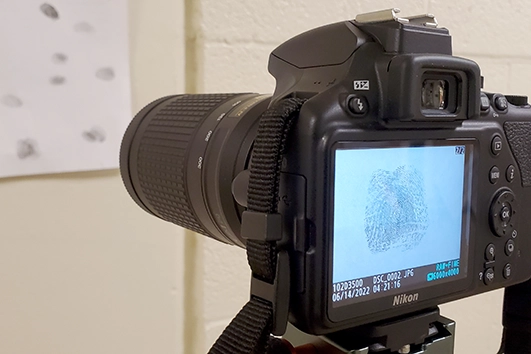
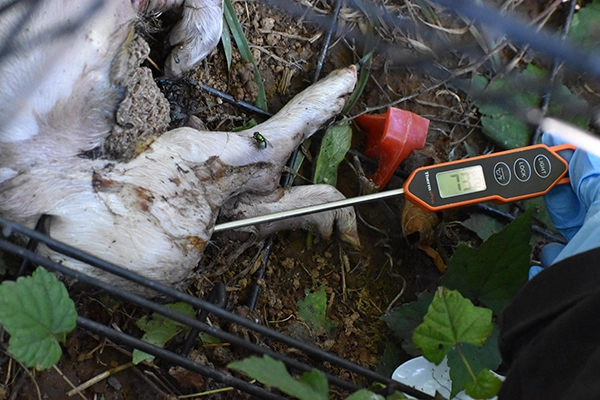
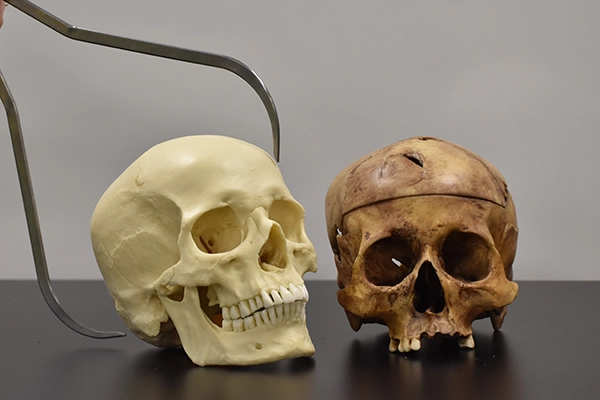
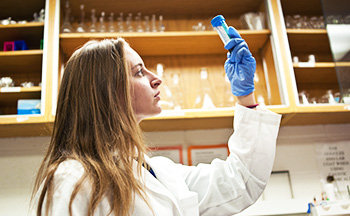
Develop the skills and experience to become a crime scene investigator, DNA analyst, or other forensic science professional with Loyola’s Master of Science in Biological Forensics. Explore forensic entomology, microbiology, anthropology, veterinary forensics, death investigation, DNA analysis, fingerprints, and more in this interdisciplinary program focusing on hands-on, experiential learning. Collect and analyze biological and ecological evidence associated with death and criminal investigations and learn how to apply it in legal and judicial settings. Whether you’re in the laboratory or the field, full- or part-time, Loyola’s forensic practitioners will challenge you to uncover the truth.
Program Features
- Delivery: In-person with select online classes
- Format: Full-time or part-time
- Duration: 2+ years
- Program Starts: Fall & Spring
- Location: Baltimore, Maryland
Program Overview
Many forensic science programs offer only a few courses in comparative sciences, requiring
you to take expensive additional training once employed in your field. At Loyola,
you will enjoy a unique emphasis on interdisciplinary skills to become a competitive
applicant for many professional forensic science roles.
In Loyola’s M.S. in Biological Forensics, you will complete 38-41 graduate credit
hours. Typical courses include:
Biological Forensic Foundation
- FO 530 Criminalistics
- FO 600 Crime Scene Investigation
- FO 652 Advanced Forensic Entomology
- FO 656/657 Biological Forensics and lab
- FO 677 Death Investigation
- FO 681 Forensic Microbiology
- FO 725 Forensic DNA Analysis
- FO 79* Forensics Science Capstone
- WR 626 Advanced Technical Writing
Electives (any 3 courses), 9-11 credits
- FO 584 Forensic Chemistry
- FO 610 Fingerprints
- FO 630 Quality Control & Assurance Forensic Laboratory
- FO 645 Veterinary Forensics
- FO 647 Trace Evidence & Questioned Documents
- FO 650 Forensic Pattern Evidence
- FO 675 Mock trial in Forensic Pattern Evidence
- FO 676 Digital & Forensic Imaging
- FO 690 Topics in Forensic Science
- FO 695 Crime Scene and Evidence Photography
- FO 700 Statistics in Forensic Science
- FO 706 Investigations into Violent Crimes
- FO 710 Advanced Topics and Techniques in Fingerprints
- FO 711 Animal Law
- FO 715 Forensic Anthropology
- FO 731 Forensic Science Management
- FO 740 Bloodstain Pattern Analysis & Crime Scene Reconstruction
- FO 752 Forensic Science Errors and Wrongful Convictions
- FO 781 Cold Case Investigations
- GB 705 Leading and Managing People
- PL 611 Bioethics
- ST 681 Probability and Statistics
This two-year program uniquely prepares you for an impactful career in forensic science fields and the justice system.
- Developed in consultation with forensic practitioners at several local, state, and federal agencies
- Graduate poised for competitive internships and job placement
- With classes located in Baltimore, experience proximity to the Baltimore–Washington, D.C., metro area, with growing opportunities in biotechnology and biohealth, forensic psychology and counseling, criminal investigation and justice, and counterterrorism
Fall Term
- FO 530 Criminalistics
- FO 656 Biological Forensics
- FO 657 Biological Forensics Lab
- WR 626 Advanced Technical Writing OR Elective
Spring Term
- FO 600 Crime Scene Investigation
- FO 677 Death Investigation
- WR 626 Advanced Technical Writing OR
Elective
Fall Term
- FO 680 Forensic Microbiology
- FO 652 Advanced Forensic Entomology
- FO 79* Forensic Science Capstone OR
Elective
Spring Term
- FO 725 Forensic DNA Analysis
- Elective
- FO 79* Forensic Science Capstone OR Elective
Apply for the M.S. in Biological Forensics
- Online application
- Non-refundable $60 application fee (waived if you attend a Virtual Information Session)
- Official transcripts
- Essay
- Two letters of recommendation
- Resume
All applications submitted prior to the Scholarship Application deadline will be automatically considered for admission and scholarships.
Register for a virtual information session to learn more about the Master of Science programs in Forensic Pattern Analysis and Biological Forensics. Sessions cover academics, course curriculum, admission requirements and all your questions.
Can't attend? Message Theresa Allen, Director of Program Operations, at teallen@loyola.edu or graduate@loyola.edu with all your questions.
Contact Us
Graduate Admissionsgraduate@loyola.edu
410-617-5020
Theresa Allen
Director of Program Operations
Forensic Science Graduate Programs
teallen@loyola.edu
410-617-2642
Career training that makes a difference
Loyola Interns Solve Cold CaseAs interns for the Howard County Police Department, Loyola forensic science students helped identify a victim in one of the county’s oldest cold cases. Students documented and digitized evidence, reevaluated fingerprints from more than 50 years ago, and leveraged genealogy and new AI technology.
Read the Story
How to use your degree
Possible Career PathsCompete in today's job market with more than hands-on experience: emerge ready to tackle any challenge. Designed in consultation with professionals in local, state, and federal agencies, the Biological Forensics master’s program at Loyola will prepare you with interdisciplinary, hands-on expertise in the lab and field, plus the professionalism, deductive reasoning, and data interpretation to stand out to future employers. From the classroom to your career, Loyola will help you be more.