Green Buildings
Buildings
Starting in 2021, all new buildings and major renovation projects at Loyola University Maryland will be built in accord with the University’s new Green Building Policy. The policy was approved by Loyola Conference, the University’s shared-governance body, on April 20, 2021. The University will look to the U.S. Green Building Council's Leadership in Energy and Environmental Design (LEED) framework with the goal of achieving a LEED Gold rating for each new building or major renovation project.
Fernandez Center for Innovation and Collaborative Learning
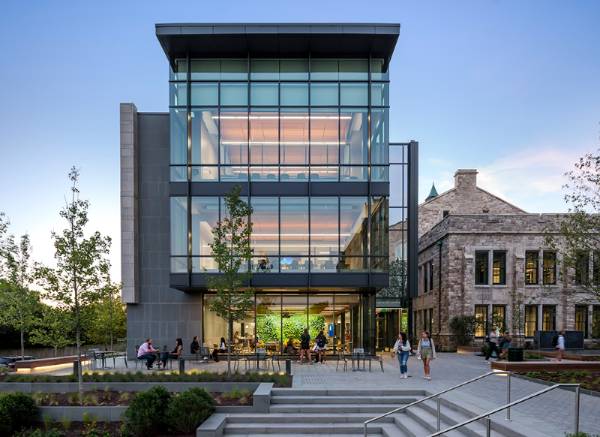
The Fernandez Center for Innovation and Collaborative Learning is Loyola's first LEED Gold Building. It opened in September 2021.
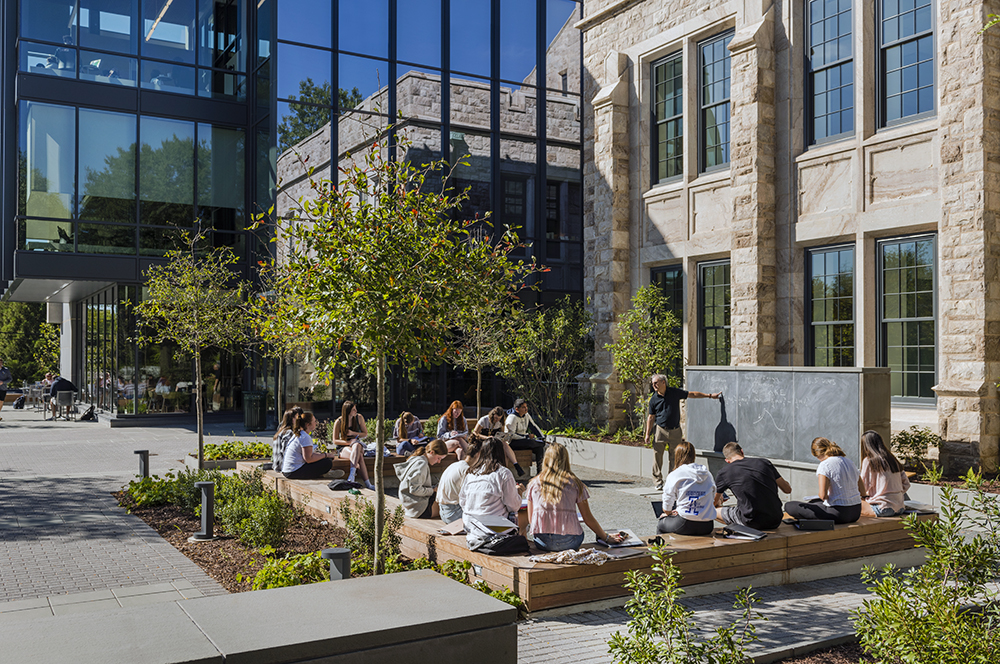
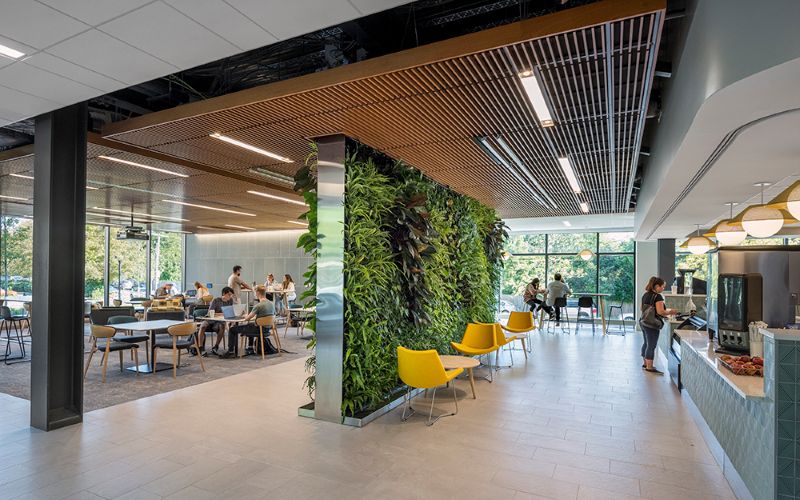
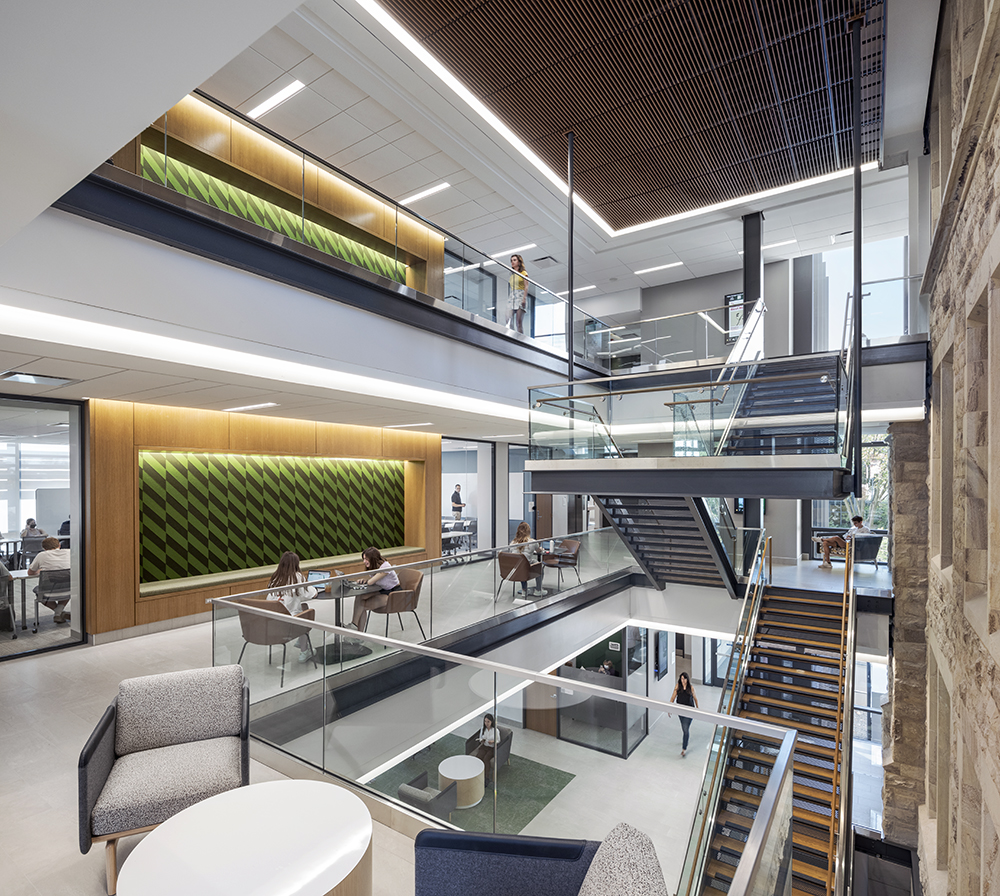
The Fernandez Center has 100% LED lighting, with eco-friendly solutions like occupancy and vacancy sensing, time-of-day scheduling, and daylight harvesting.
The rooftop air handling includes a new high-end grade unit that provides UV lights for airstream disinfection.
This system includes a 2,100-square-foot green roof garden, permeable paving, and bioretention garden, designed to help protect local waterways by capturing and filtering 100% of the rainwater that falls on the site for irrigation.
Low-flow sinks and toilets are installed throughout the building, reducing annual indoor water consumption by 40%.
Ridley Athletic Complex
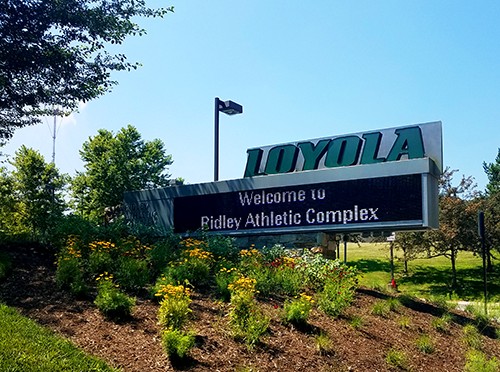
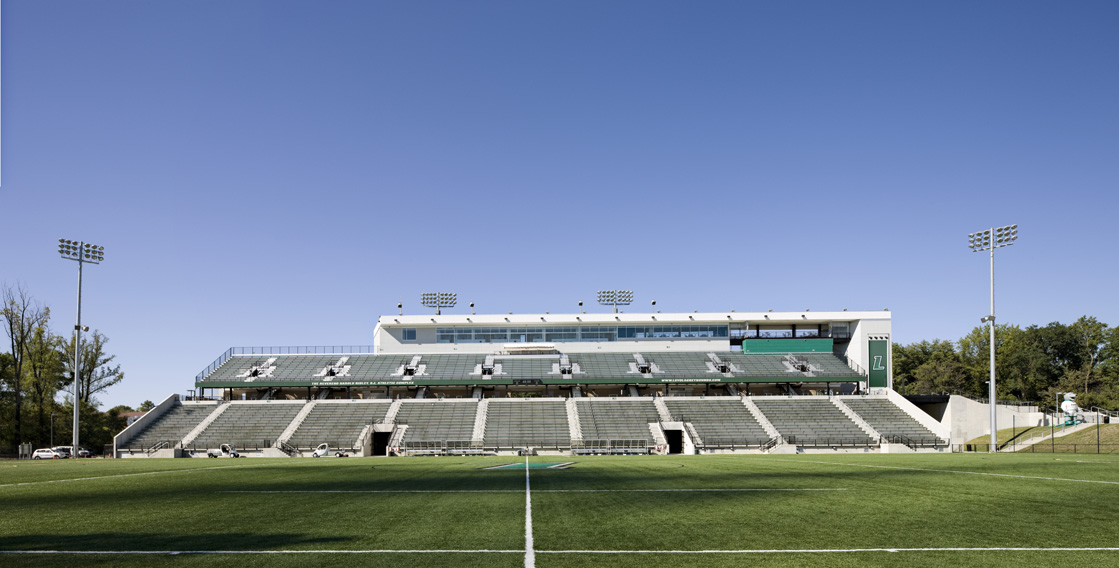
Loyola reclaimed and remediated the site of two former municipal solid waste landfills to construct Ridley Athletic Complex. It took 7 years to transform the site into a flat 50-acre area which could support the 6,000 seat stadium complex. The remaining site opened in 2010 and included the establishment of a conservation area where existing mature tree species were conserved, degraded native habitats were reestablished, site storm water captured, and methane gas collected and vented. Over 200 trees were planted to enhance the new forest area.
The entry sign at Ridley was transformed into a native perennial pollinator garden by Grounds Department in 2017.
Thea Bowman Hall
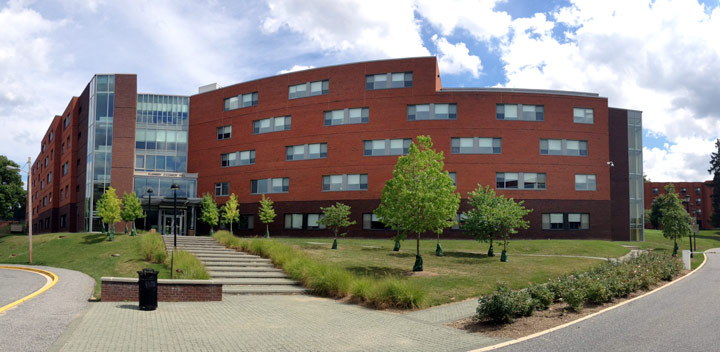
Constructed in 2007, recycled materials, geothermal energy, advanced mechanical systems, and hidden greenery make Thea Bowman Hall Loyola’s most sustainable residence. The building’s many sustainability features continue to capture the spirit of sustainable design on campus and remain a flagship for Loyola’s commitment to sustainable operations.
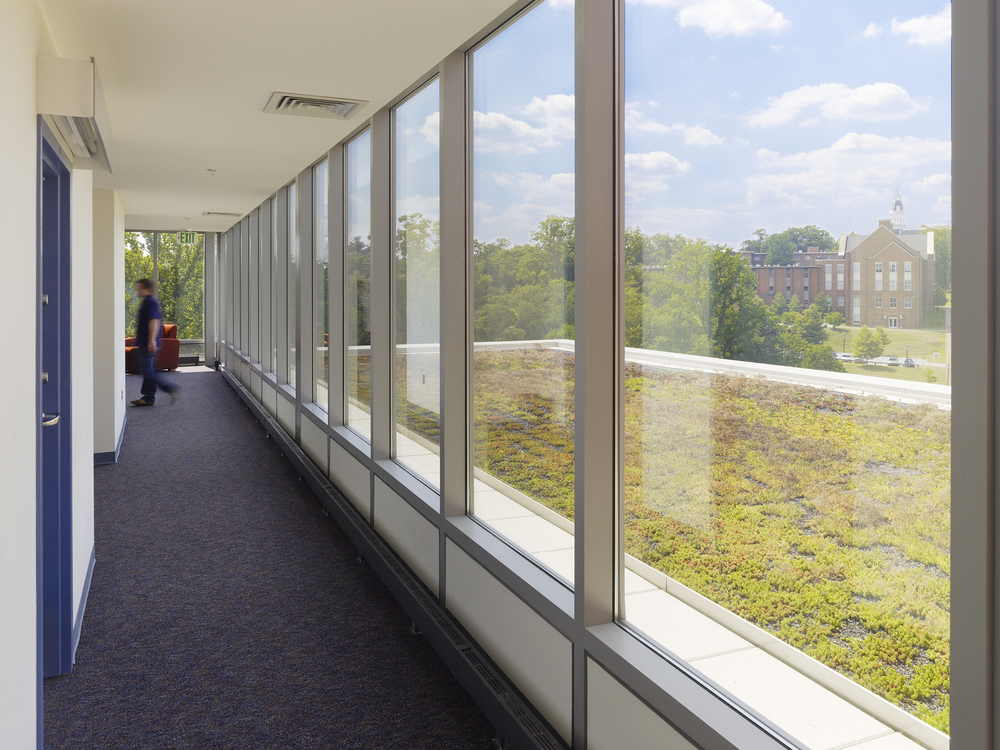
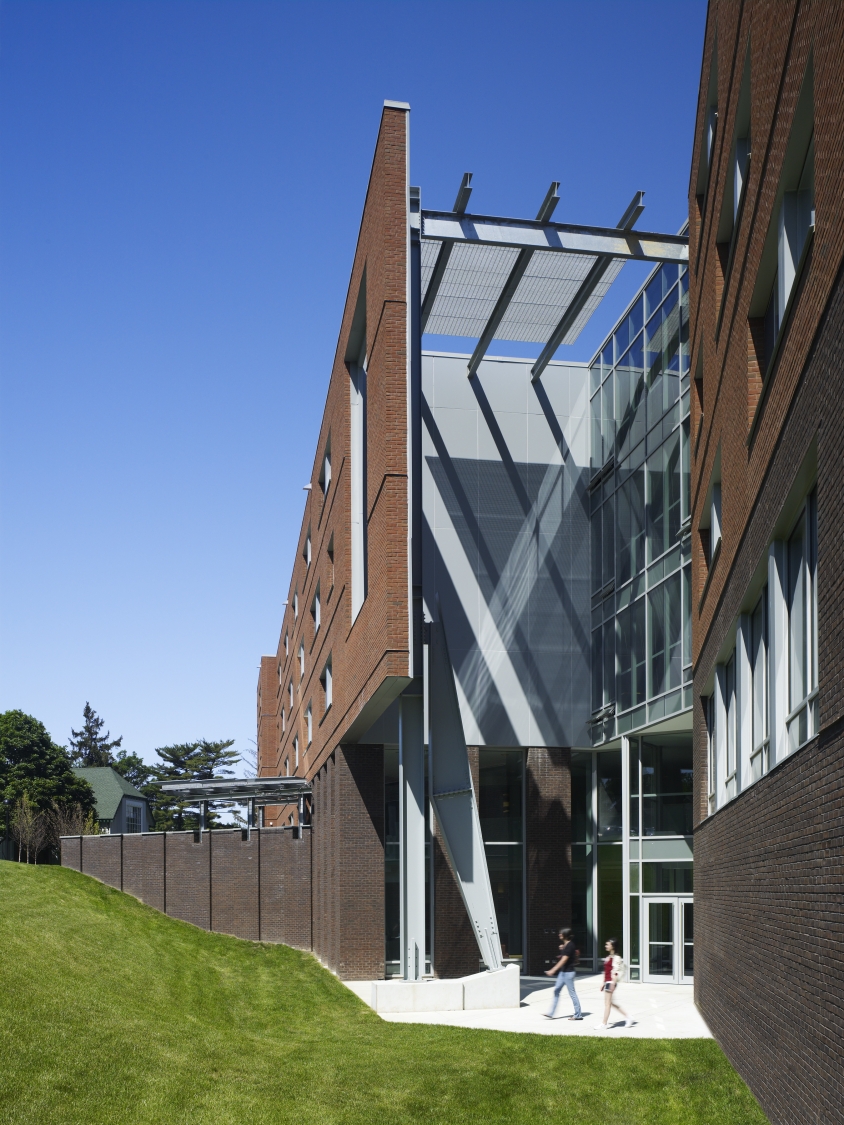
- Over 80% of the building’s materials are recycled and local materials, many manufactured within a 500-mile radius. They sourced exterior brick from Shewsbury, Pennsylvania, just 35 miles from campus.
- The exterior steel entrances are more than just stunning, they are made from recycled materials. All of the structural steel is made from 90% recycled steel content.
- Toilet partitions, bathroom stalls and many plastic fixtures in the building are made from recycled plastic.
- A sustainable geothermal energy system heats and cools the building efficiently. Highly efficient insulation and thermal performance materials maximize these energy savings.
- Resident kitchens feature energy star rated appliances to maximize energy efficiency.
- Paints, sealants and adhesives are low VOC.
- Rooms and lounges are outfitted with furniture constructed from sustainably harvested solid wood, water based solvents and low VOC finishes.
- Tall windows throughout the building maximize natural daylight and reduce the need for artificial lighting.
- High efficiency compact fluorescent, fluorescent and LED light fixtures can also be found throughout the building reducing energy consumption.
- The walking paths around the building are permeable paving to reduce storm water runoff to protect local water quality.
The roof features a 20,000 SF highly insulated and energy efficient EPA rated green roof garden. The garden reduces increases the efficiency of heating and cooling systems and reduces storm water runoff.
Interface Cool Carpet is installed throughout Loyola residence halls. Cool carpet is carbon neutral carpet squares made from recycled materials and is easily recycled at the end of its useful life.
- Loyola has many water refilling stations across campus so that you can reduce plastic and refill reusable drinkware. See a map of water refilling station locations.
- Water conserving low flow fixtures are installed across campus. Shower heads in residence halls were retrofitted to modern low flow models to help students conserve fresh water in their residence hall in 2017.
- Stormwater management: This system includes a 2,100-square-foot green roof garden,
permeable paving, and bioretention garden, designed to help protect local waterways
by capturing and filtering 100% of the rainwater that falls on the site for irrigation;
• Water conservation: Low-flow sinks and toilets are installed throughout the building, reducing annual indoor water consumption by 40%.
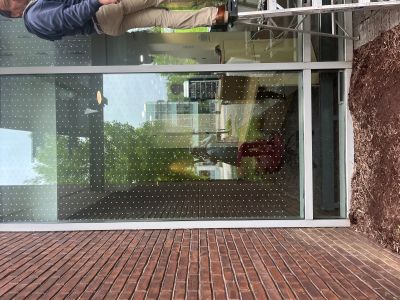
You may notice small, white dots on the windows at the Thea Bowman entrance facing the Loyola-Notre Dame Library. These are part of a bird-film installation pilot that was installed in Spring 2026 in response to students asking for more bird collision prevention measures on campus.