Zero Waste
Loyola's Facilities Department diligently works to reduce waste at the source and divert waste whenever possible. Learn about our traditional waste streams as well as our special recycling programs and zero waste initiatives.
Traditional Waste Streams
Compost
Composting is the process by which organic materials are broken down and become a nutrient-dense soil enhancer.
Compost bins are available at all dining locations on Loyola's campus and on the quad.
As spaces are renovated and new buildings are built, Loyola is working towards adding
composting bins to academic spaces. We use green compostable bags in our compost bins.
The following items can be composted on campus:
- All food
- Loyola Dining to-go containers, bowls, cups, straws, & utensils
- Napkins & paper towels
Want to compost in your residence hall? We don't currently offer composting infrastructure in our residence halls, but we've been running a successful opt-in residence hall composting pilot. Contact sustainability@loyola.edu to learn about this program.
Recycling
Single-stream recycling ( meaning all recyclable materials can go into the same bin),
is available in all residential and administrative buildings on campus. We use clear
bags in our recycling bins.
Only the following clean and empty items should go into Loyola's recycling bins:
- Aluminum and metal cans
- Plastic bottles and jugs
- Paper and cardboard
Landfill
All other materials should go into the landfill bins including:
- All plastic bags and packaging
- Beverage cups from Starbucks
- Sandwhich wrappers from Loyola Dining
- Food bags and wrappers ( see below for special recycling options)
- Styrofoam packaging
- Solo cups
When in doubt, throw it out! It's better to not risk contaminating a recycling or compost bin.
Help us keep our waste streams clean and free of contamination. Even a single misplaced item can contaminate an entire recycling or compost bag.
To support proper sorting, our EVS and Grounds teams use color-coded bags for each waste stream:
- Green for compost
- Clear for recycling
- Black for landfill
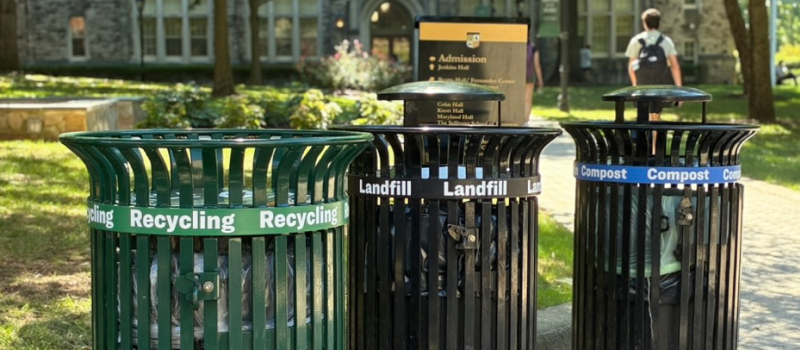
Our staff are trained to identify and remove contaminants whenever possible. However, when contamination cannot be reasonably separated, the entire bag must be disposed of as landfill waste to prevent contamination of the recycling or compost dumpster.
Please familiarize yourself with what materials go into each bin to help us Care for Our Common Home!
Printable Waste Bin Signs:
Landfill
Recycling
Compost
Special Recycling Programs
Batteries
Do not put batteries into the regular trash or recycling bins; locate a special battery recycling bin ( see pdf link below for a list of campus locations). Environmental Health and Safety coordinates the collection, pick-up, and disposal of electronic and hazardous waste on campus. Contact EHS@loyola.edu for more information.
Battery recycling bin locations at Loyola
Electronics
Electronic waste is managed by the Office of Technology Services. Materials are either recycled or sold at auction.
Contact ots@loyola.edu to learn more.
Furniture
Snack Bags & Candy Wrappers
The Office of Sustainability partners with TerraCycle to divert specific wastes from the landfill and turn them into new products. We are currently collecting snack and candy wrappers.
How Does the Program Work?
1. Set Up: Create a collection container for your office/common area (a cardboard box or shoe box would work well). Upon request, The Office of Sustainability can also provide a reuseable bin (supplies limited). Collect each type of item separately (for example, one bin for snack wrappers and another for writing instruments).
2. Label: Print and attach the appropriate "Special Recycling Signage" guide to your box.
3. Collect: Encourage others to deposit only the accepted items listed on the signage.
4. Pick-Up: Once your collection box is full, email sustainability@loyola.edu and an Office of Sustainability intern will pick up your container’s contents and add it to our bulk collection bin. Once our bulk collection bin is full, we will ship it to TerraCycle to be properly recycled.
Why?
This initiative is part of our commitment to Caring for our Common Home. By participating,
Greyhounds can directly reduce Loyola’s carbon footprint and promote a circular economy.
Questions? Contact sustainability@loyola.edu
Used Writing Utensils
The Office of Sustainability partners with TerraCycle to divert specific wastes from the landfill and turn them into new products. We are currently collecting used writing utensils ( markers, pens, mechanical pencils, dry-erase board markers).
How Does the Program Work?
1. Set Up: Create a collection container for your office/common area (a cardboard box or shoe box would work well). Upon request, The Office of Sustainability can also provide a reuseable bin (supplies limited). Collect each type of item separately (for example, one bin for snack wrappers and another for writing instruments).
2. Label: Print and attach the appropriate "Special Recycling Signage" guide to your box.
3. Collect: Encourage others to deposit only the accepted items listed on the signage.
4. Pick-Up: Once your collection box is full, email sustainability@loyola.edu and an Office of Sustainability intern will pick up your container’s contents and add it to our bulk collection bin. Once our bulk collection bin is full, we will ship it to TerraCycle to be properly recycled.
Why?
This initiative is part of our commitment to Caring for our Common Home. By participating,
Greyhounds can directly reduce Loyola’s carbon footprint and promote a circular economy.
Questions? Contact sustainability@loyola.edu
Additional Zero Waste Programs
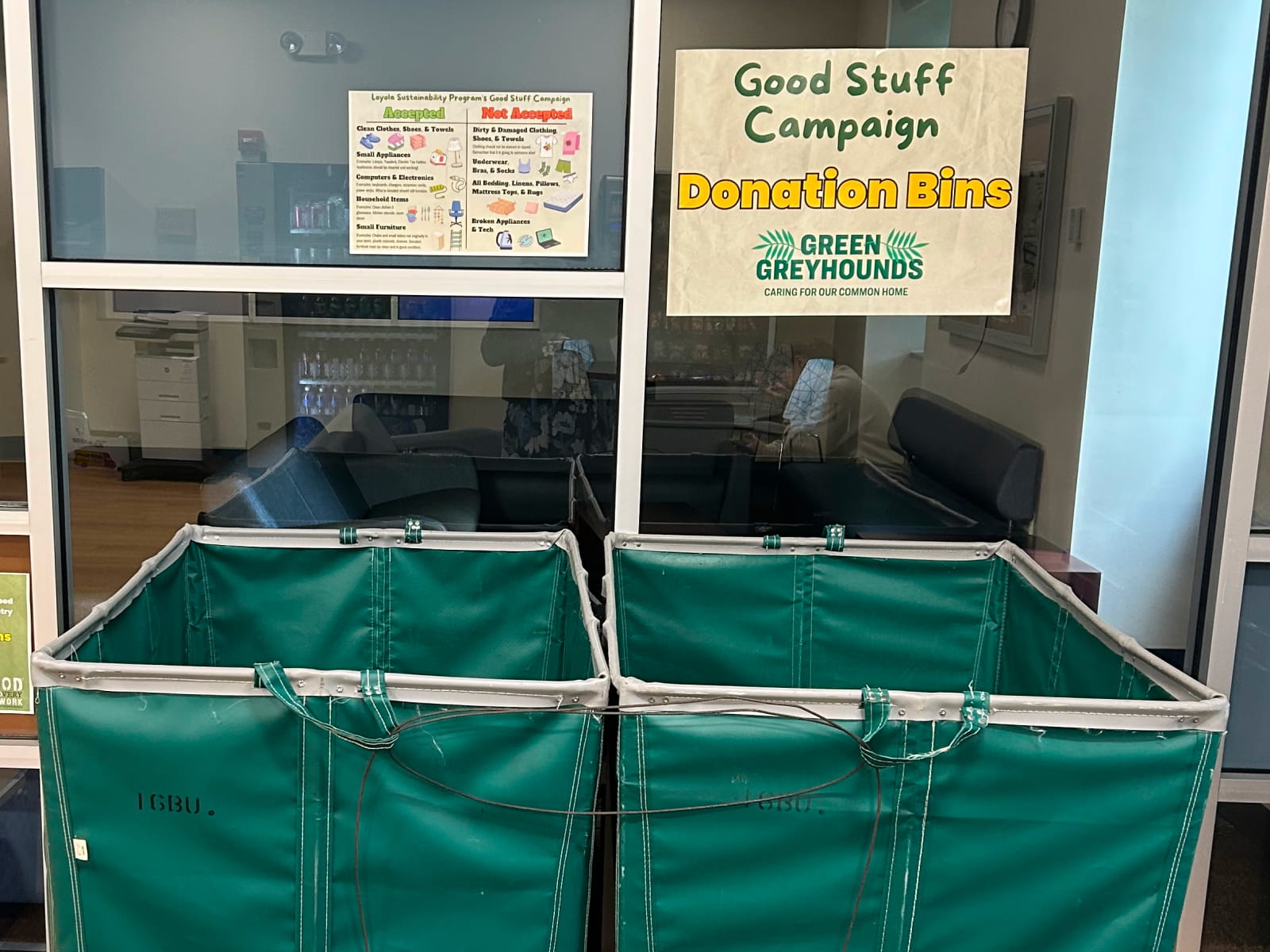
Good Stuff Campaign (aka Loyola Move-Out Donation Collection)
The Office of Sustainability hosts the Good Stuff Campaign ever year during the spring semester finals and move-out. It provides students with an opportunity to live out Loyola’s mission by donating their clothing, dishes, small appliances, and unopened food to local organizations in need.
We typically collect the following items to donate to our Baltimore partners:
- Clean clothing
- Small furniture
- Small, clean appliances
- Small refrigerators- must be properly defrosted!
- Household items
- Room decor
- Clean towels
- Unopened food
- Unopened toiletries
We do not accept:
- Dirty or wripped clothing
- Bed sheets
- Mattress toppers
- Dirty or bleached towels
- Opened toiletries
- Opened food
Follow us on Instagram at @greengreyhounds to know when we are preparing for our next collection or contact sustainability@loyola.edu with questions.
Hydration Stations
Reusable water bottle stations help Loyola community members stay hydrated sustainably on the go! Fill up your bottle at one of the many hydration stations available across campus.
Govans Community Compost Bin
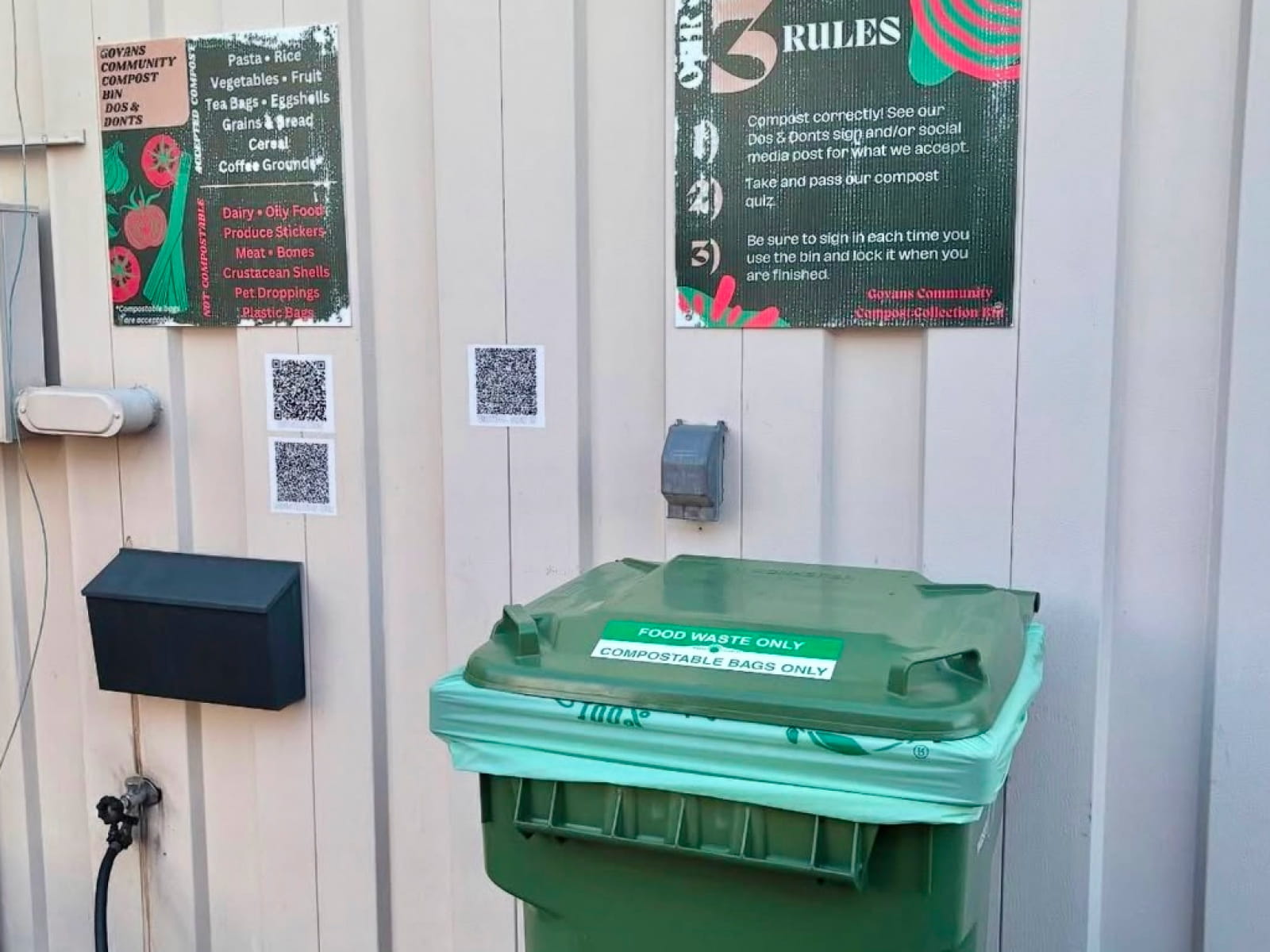
As part of the Baltimore Comprehensive Composting Pilot in partnership with the U.S. Department of Agriculture, Natural Resources Conservation Service (NRCS), the Mayor and City Council of Baltimore, Department of Public Works, Johns Hopkins University, and the University of Maryland – Baltimore, we are pleased to offer a community compost drop-off site at 5104 York Rd (site of the Govanstowne Farmer’s Market)! The collection bin is located next to the community fridge. The overarching goal of the Baltimore Comprehensive Composting Pilot is to increase Baltimore City residents’ and communities’ access to composting and food waste reduction opportunities by removing long standing educational, social, and economic barriers.
Cool Carpet Program
Interface Cool Carpet is installed throughout Loyola residence halls. Cool carpet is carbon neutral carpet squares made from recycled materials and is easily recycled at the end of its useful life.