Loyola alumna, Jennifer Appleton, conducts a dyslexia simulation in honor of Dyslexia Awareness Month
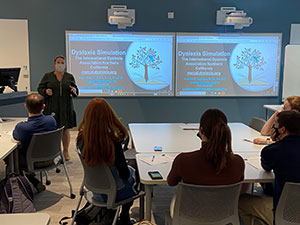 The month of October is recognized internationally as Dyslexia Awareness Month. In
honor of the month, Jennifer Appleton, M.Ed. ’00, shared her expertise through a dyslexia
simulation for the literacy education class, SE 296.01 (Intro to Spec Ed), where participants engaged in hands-on activities
that simulated the experience of having dyslexia while learning to read.
The month of October is recognized internationally as Dyslexia Awareness Month. In
honor of the month, Jennifer Appleton, M.Ed. ’00, shared her expertise through a dyslexia
simulation for the literacy education class, SE 296.01 (Intro to Spec Ed), where participants engaged in hands-on activities
that simulated the experience of having dyslexia while learning to read. The International Dyslexia Association defines dyslexia as “a specific learning disability that is neurobiological in origin. It is characterized by difficulties with accurate and/or fluent word recognition and by poor spelling and decoding abilities. These difficulties typically result from a deficit in the phonological component of language that is often unexpected in relation to other cognitive abilities and the provision of effective classroom instruction. Secondary consequences may include problems in reading comprehension and reduced reading experience that can impede growth of vocabulary and background knowledge.”
Dyslexia is a learning difference that effects approximately 1 out of 5 people and occurs across all intellectual levels.
Jennifer runs a private dyslexia therapy practice where she instructs, screens, trains, and consults. In addition, she is a supervisor for the Atlantic Seaboard Dyslexia Education Center where she coaches and mentors individuals being trained and accredited in multisensory structured language education who wish to become Certified Academic Language Therapists. Jennifer holds a Master of Education in Literacy, Reading Specialist from Loyola University Maryland and a postgraduate professional reading specialist license in the state of Virginia. She is an active member of the International Dyslexia Association and attends their National Conference each year. She enhances her practice through additional memberships with the Academic Therapy Language Association and The International Multisensory Structured Language Education Council.