How Loyola Professor Jennifer Watkinson Is Training the Next Generation of School Counselors
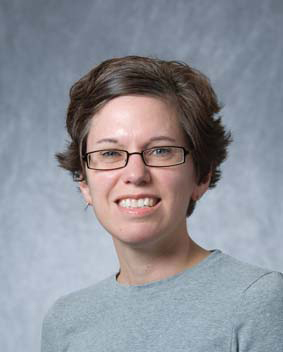 Faculty Spotlight: Jennifer Scaturo Watkinson, Ph.D., LCPC, BCC
Dr. Jennifer Scaturo Watkinson knows what it takes to show up for students and families in a school counseling office. Before joining Loyola’s School of Education, she spent 14 years as an elementary school counselor, building and leading a comprehensive, data-driven program focused on children's mental health needs.
That experience didn’t just inform her teaching. It’s ultimately the reason she came to Loyola.
“I was an elementary school counselor for 14 years and had a strong desire to positively impact the profession through the training and supervision of future school counselors,” said Dr. Watkinson.
Now in her 16th year at Loyola, Dr. Watkinson brings that same intentionality to everything she does as a professor in the School Counseling program. Her work spans the classroom and the broader school community. It is all grounded in a single belief that research must inform and enhance practice.
In the Classroom
Dr. Watkinson describes her teaching philosophy as rooted in constructivism, the idea that new knowledge is built through its connection to what a learner already knows and understands. For school counseling students, that means preparation cannot stop at content knowledge – it has to extend to application.
“I strive to create a dynamic classroom space that allows for creativity, curiosity, and student voice,” she said. “Students need to feel valued and supported to take risks and sit with the discomfort that comes when you challenge yourself to grow and try new things.”
Those values align closely with Loyola’s Jesuit tradition. Dr. Watkinson points to cura personalis, discernment, and reflection as core principles that shape how she teaches and supports her students.
In most of her courses, there is a direct applied element. Students connect what they are learning in the classroom to the small group counseling interventions they lead at their practicum sites. To get there, Dr. Watkinson provides hands-on structure, modeling how to design a group session that balances content, engagement, and the interpersonal dynamics among group members.
Her support for students does not end when class is over.
“I meet with students during and outside of class, even working with students during their internship, and once they get jobs to support their group planning,” Dr. Watkinson said.
Research
Dr. Watkinson is one of the first recipients of Loyola’s engaged scholar award, a recognition that reflects her belief that research should make a tangible difference in people’s lives. She describes herself as “a counselor educator who believes research must inform and enhance the practice of professional school counselors.”
Her current research focuses on three areas:
- Examining the preparation and practice gap in school counseling: drawing on Senge’s Organizational Learning theory and coaching strategies to coach school counselors on how they can make small changes to gain bigger impact that will position them closer to aligning their practice to their preparation.
- Examining the experience of parents during the recruiting process to highlight the emotional toll parents experience: this is the first of many research studies to understand the complexities of college recruiting and the emotional impact on student-athletes and their parents.
- Exploring athletic identity during college recruiting for athletes: specifically, looking at how student athletes negotiate their athlete identities when faced with a potential threat to that identity.
In 2025, Dr. Watkinson and her co-authors published research on school counselors’ mental models and role transformation in Counseling Scholarship and Practice in Educational Communities. Additionally, her article "Understanding Parents' Experiences in College Recruiting: Insights for School Counselors" will be published in Professional School Counseling.
For those considering a master’s in school counseling, Dr. Watkinson is direct about what the investment means.
“Candidates seeking a master’s in counseling should consider that they are investing in their education to position themselves to gain the skills, knowledge, and dispositions required to best service youth populations,” she said
“Candidates should do their homework to invest in programs that care about their development, are strongly networked within the community, and have dedicated faculty who understand the counseling field and have a range of expertise.”
She also offers a long-term view of what the profession asks of its practitioners.
“Engaging in the counseling profession you are committing to a lifetime of learning so that you are always best positioned to help the K-12 student population.”
Interested in becoming a school counselor? Explore Loyola’s School Counseling program and learn how you can take the next step in your career.