Loyola’s Community of Inquiry Highlights Student Research at the Center for Research and Evaluation Annual Symposium
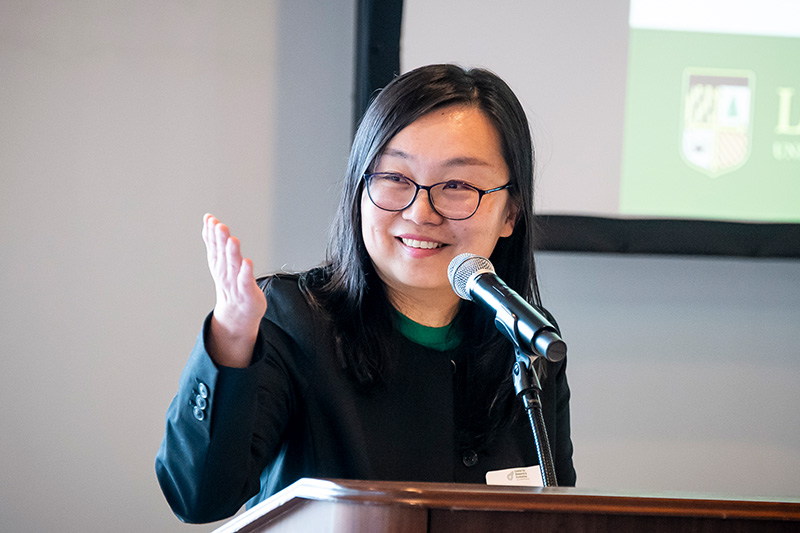
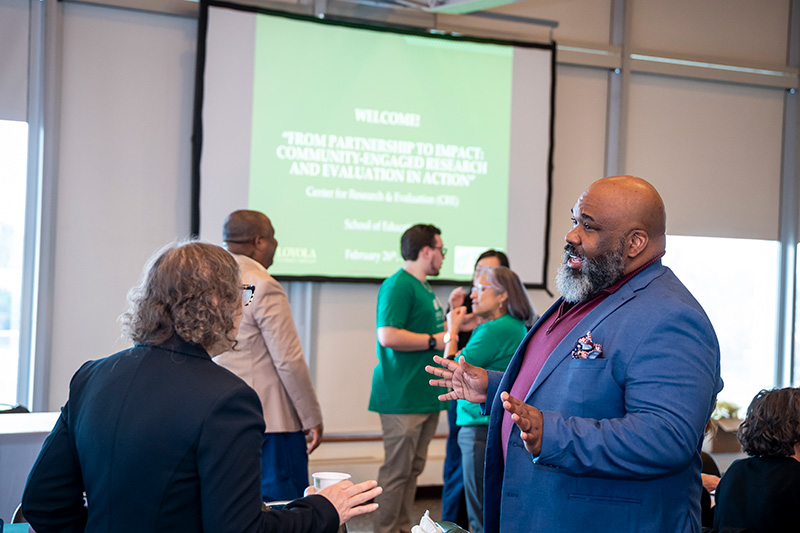
At Loyola’s Center for Research and Evaluation (CRE), the annual symposium provides a space for students, faculty, and community leaders to share research, ideas, and projects related to the center’s work. The 2026 CRE Annual Symposium was held on February 26, 2026, with the theme “From Partnership to Impact: Community-Engaged Research and Evaluation in Action.”
One of the center’s main initiatives is the Community of Inquiry (COI), which provides undergraduate and graduate students from various majors with hands-on opportunities to learn and apply qualitative and quantitative research methods while working in close partnership with schools and community organizations.
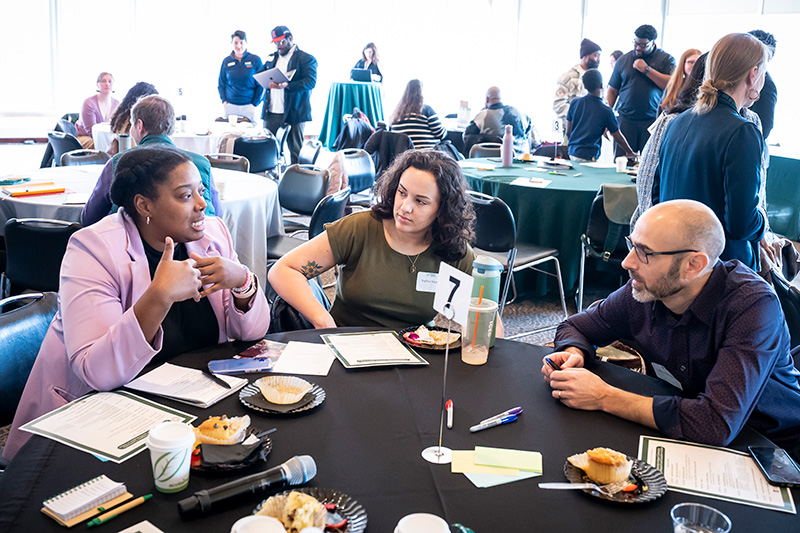
Since its launch in the 2024-25 academic year, COI has brought together two cohorts of students from across disciplines, including Elementary Education, Secondary Education, School Counseling, Psychology, Sociology, Philosophy, English, Spanish, and Speech-Language-Hearing Sciences.
COI members meet monthly with Loyola faculty mentors, participate in training on community-engaged inquiry methods, and present their research at the center’s annual symposium.
“At the heart of the COI is the opportunity for students to learn through doing, work across disciplines, and contribute to research that supports our local schools and communities,” said Qi Shi, Ph.D., LCPC, Director of the Center for Research and Evaluation.
At the 2026 annual symposium, COI members presented research projects developed in partnership with Walter P. Carter Elementary/Middle School, which included the following topics:
- Baltimore Resources Heat Map: Develop a comprehensive, accessible map of local educational and community resources to support schools, students, and families.
- Math Intervention Group: Examine the integration of the AARP Literacy Model and explore alternative models into math tutoring and intervention efforts, with a focus on student learning and engagement.
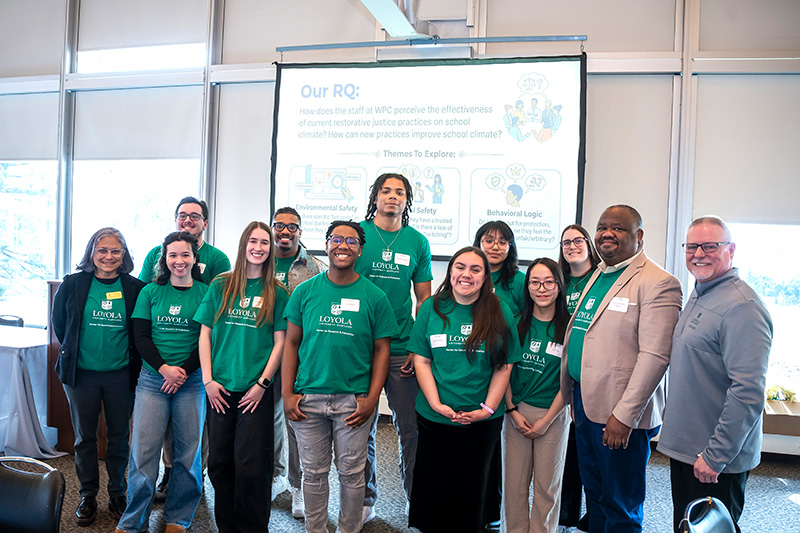
- Restorative Justice & School Climate: Explore staff perceptions of current restorative justice practices and identify opportunities to strengthen school climate and promote positive peer relationships.
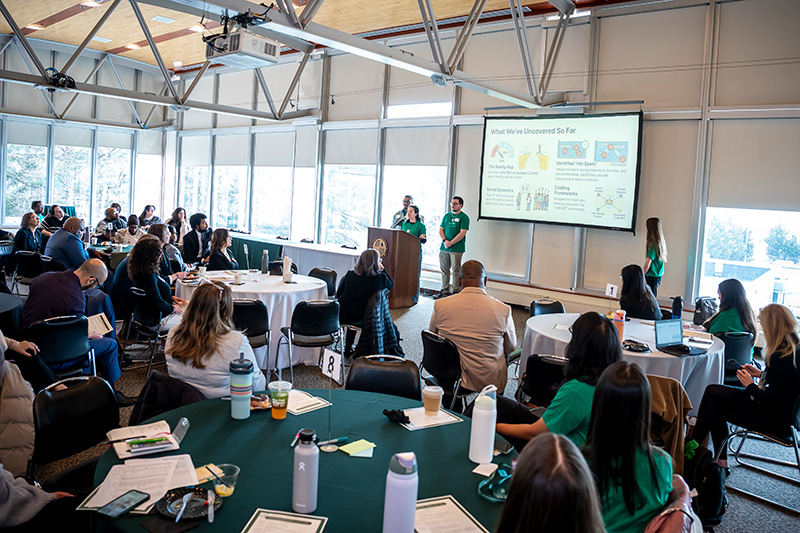
Baltimore Resources Heat Map
The Baltimore Resources Heat Map aims to answer the following research questions:
- What mismatches exist between high-need areas and the presence of specific existing partners in Baltimore?
- Which resource types (e.g., “on-site therapist,” “family navigator,” “ESL tutoring,” “housing assistance program”) are present in high-need areas, and which are missing?
- To what extent do high-need areas align with the presence and distribution of existing resource partners?
The COI team’s goal is to create a functional, interactive map that displays areas of need overlaid with available resources.
Math Intervention Group
The Math Intervention Group aims to answer the research question “How can the AARP literacy model be integrated into a structured math tutoring program to support improved MCAP math performance among students in the 3rd grade?”
The COI team’s goal is to develop and implement a structured math tutoring program integrating the AARP literacy model. They also aim to create a comprehensive evaluation report summarizing quantitative and qualitative findings to assess program effectiveness.
Restorative Justice & School Climate
Restorative Justice & School Climate aims to answer the research questions “How does the staff at Walter P. Carter perceive the effectiveness of current restorative justice practices on school Climate?” and “How can new practices improve school climate?”
The COI team’s anticipated outcomes are:
- Clearer intervention trails
- Target interventions
- Stronger communication
An important aspect of this year’s COI research presentations is that they are still in progress. COI members used the annual symposium to present their research questions, methods, timelines, challenges, and next steps. This approach matches the spirit of both the COI and the symposium by emphasizing inquiry, collaboration, and the process of developing meaningful research over time.
For students interested in research and community engagement, COI offers a clear pathway to applied learning at Loyola. The program welcomes students from all majors, does not require research experience, and offers opportunities for mentorship, peer collaboration, and research training. COI members also have the opportunity to be hired as student workers or graduate assistants for the CRE.
AS the COI prepares to welcome its third cohort, students interested in joining can contact the CRE at SOEcenter@loyola.edu or download the flyer below. Learn more about the Center for Research and Evaluation at Loyola.