Grand Seminar

Loyola University Maryland’s academic division of natural and applied sciences will present the 2026 Grand Seminar on Thursday, November 12 at 6 p.m. in McGuire Hall. The event will feature keynote speaker Dr. Elaine Fuchs, Rebecca C Lancefield Professor, Mammalian Cell Biology and Development, Howard Hughes Medical Institute Investigator, The Rockefeller University, New York, USA.
Dr. Elaine Fuchs is a pioneering cell and stem cell biologist whose research has transformed
our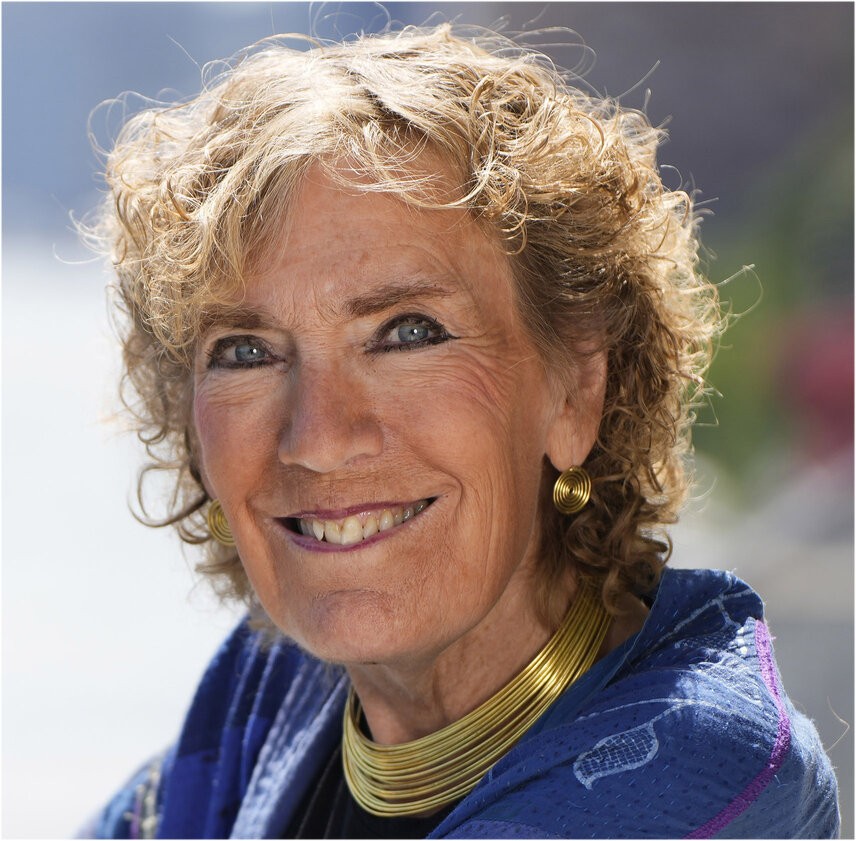 understanding of skin biology, tissue regeneration, and the genetic basis of human
disease. She earned a B.S. in Chemistry from the University of Illinois, a Ph.D. in
Biochemistry from Princeton University, and completed postdoctoral training in Cell
Biology at MIT. After serving as Amgen Professor of Basic Sciences at the University
of Chicago (1980–2002), she joined The Rockefeller University, where she is the Rebecca
C. Lancefield Professor and an HHMI Investigator. Over more than four decades of NIH-funded
research and more than 380 publications, Dr. Fuchs pioneered reverse genetics approaches
that established the molecular causes of inherited skin disorders, uncovered fundamental
signaling pathways governing skin and hair follicle development, and defined how stem
cells interact with their microenvironment to maintain and repair tissues. Her groundbreaking
contributions have earned many of the world’s highest scientific honors, including
the National Medal of Science, the Gairdner International Award, the E.B. Wilson Award,
and election to the National Academy of Sciences, the National Academy of Medicine,
the American Philosophical Society, the Royal Society, and the Pontifical Academy
of Sciences.
understanding of skin biology, tissue regeneration, and the genetic basis of human
disease. She earned a B.S. in Chemistry from the University of Illinois, a Ph.D. in
Biochemistry from Princeton University, and completed postdoctoral training in Cell
Biology at MIT. After serving as Amgen Professor of Basic Sciences at the University
of Chicago (1980–2002), she joined The Rockefeller University, where she is the Rebecca
C. Lancefield Professor and an HHMI Investigator. Over more than four decades of NIH-funded
research and more than 380 publications, Dr. Fuchs pioneered reverse genetics approaches
that established the molecular causes of inherited skin disorders, uncovered fundamental
signaling pathways governing skin and hair follicle development, and defined how stem
cells interact with their microenvironment to maintain and repair tissues. Her groundbreaking
contributions have earned many of the world’s highest scientific honors, including
the National Medal of Science, the Gairdner International Award, the E.B. Wilson Award,
and election to the National Academy of Sciences, the National Academy of Medicine,
the American Philosophical Society, the Royal Society, and the Pontifical Academy
of Sciences.
Between our Bodies & The World: Tissue Stem Cells in Health, Inflammation, and Cancer
Throughout our lifetime, nearly every tissue of our body has the ability to replace dying cells with young ones and repair wounds after injury. This remarkable capacity comes from the adult stem cells that reside in our tissues and which hold the long-term capacity to both self-renew to replenish themselves and to differentiate to regenerate damaged tissue. Many stem cells are used sparingly to replenish cells during normal homeostasis. However, even stem cells that are quiescent must be able to respond quickly to injury in order to fuel rapid tissue regeneration. How stem cells balance self-renewal and differentiation is of fundamental importance to our understanding of normal tissue maintenance and wound repair. The regulatory circuitry governing this normal balancing act is must be intricately regulated in normal homeostasis, and then transiently altered to cope with injury responses. Increased evidence suggests that the stem cells are highly sensitive to their surrounding cells (their ‘niche’) within the tissue, and that this crosstalk goes awry in inflammation and becomes hijacked in cancers. We use skin as a model to understand how the microenvironment impacts the stem cells and their behavior in health and disease, with the intent to unfold new avenues for therapeutics. Our work involves a range of high throughput technologies ranging from single cell RNA-sequencing to chromatin landscaping for multiple transcription factors and epigenetic modifiers to machine learning to decipher the dynamics involved. Our analyses are largely performed on in vivo cells purified from normal or malignant tissues, which allows us to interrogate the physiological relevance of changes in chromatin, transcriptome and translational landscapes.
About the Grand Seminar
Beginning in 2011, natural and applied sciences hosts a yearly seminar with the goal of engaging Loyola students as well as providing an enlightening and informative event for the greater Loyola community. Watch past Grand Seminar presentations.